Popeye the Sailor has had an immense influence on both American culture and world culture, and it would be easy for me to write an entire blog series focused solely all the ways he has done so (just take a look at the list on Wikipedia). I don’t plan to write about all of those things, of course, but there are some stand outs that I would like to tackle. I thought it would be best to start with the one thing that everyone who knows anything about Popeye knows that he loves to eat: spinach.
It’s a well-known fact that when Popeye is in need of a little extra boost to get himself out of a bind, he downs an entire can of spinach, after which he gains superhuman strength. This is how it always goes in the Popeye animated cartoons at least. The theme song even calls attention to this fact, when Popeye sings “I’m strong to the finich cause I eats me spinach.” It’s quite odd as far as famous elixirs of health go, but it fits with the silliness of the slapstick comedy on display in the cartoons, and also makes some kind of real world sense when you consider it. Leafy greens are known to be healthy in general, and most people are aware that spinach has important nutrients such as iron in it, so it stands to reason that it could be something a strong man would eat to get even stronger.
But it wasn’t always this way. Popeye’s relationship with spinach has changed over the years.
Popeye first appeared in a newspaper comic created by E.C. Segar titled Thimble Theatre. The strip began in 1919, though Popeye would not appear until ten years into its run, in 1929. He was an immediate sensation, and soon became the star of the strip. The title of the strip was even changed to Thimble Theatre Starring Popeye, and eventually to simply Popeye. In 1933, he began appearing in a long running series of cartoon shorts from Fleisher Studios, which increased his popularity and notoriety even further.
It was the animated shorts which really cemented the Popeye lore that most people are familiar with, but they also introduced things that weren’t necessarily established in the comic strip. For instance, while the comic strip establishes that Popeye does derive his strength from eating spinach, eating a can of it didn’t give him an immediate boost. He had just always been very strong, and he attributes this to the fact that he ate spinach as a child.
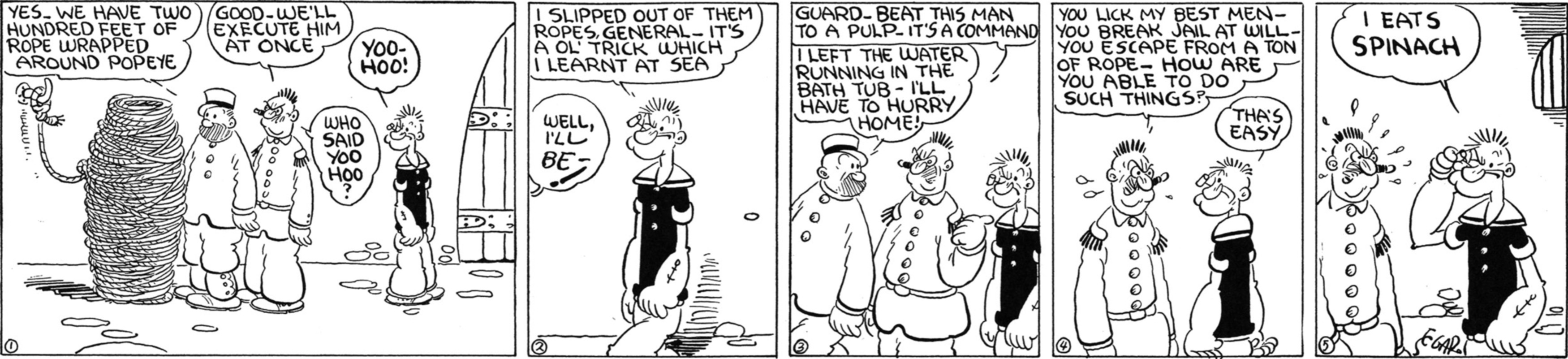
The first reference to this is in a story that began in May 1931. King Blozo of Nazilia, in the midst of a war with his neighboring nation, Tonsylania, calls on Popeye to assist him in the war effort. Popeye agrees to help, but was never one for following orders, and thus ends up having an altercation with Chief General Bunzo during which Popeye punches him in the face. Bunzo decides that Popeye must be executed for this, but Popeye manages to escape from the mile of rope the jailers tie him up with and beats up the executioners. When asked by Bunzo how he could accomplish such feats, Popeye’s simple answer is “I eats spinach.”
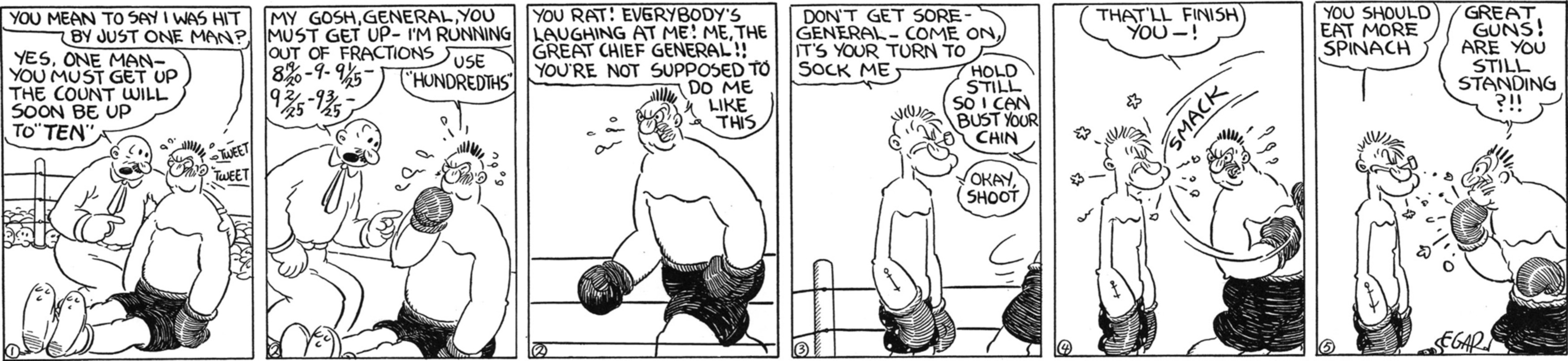
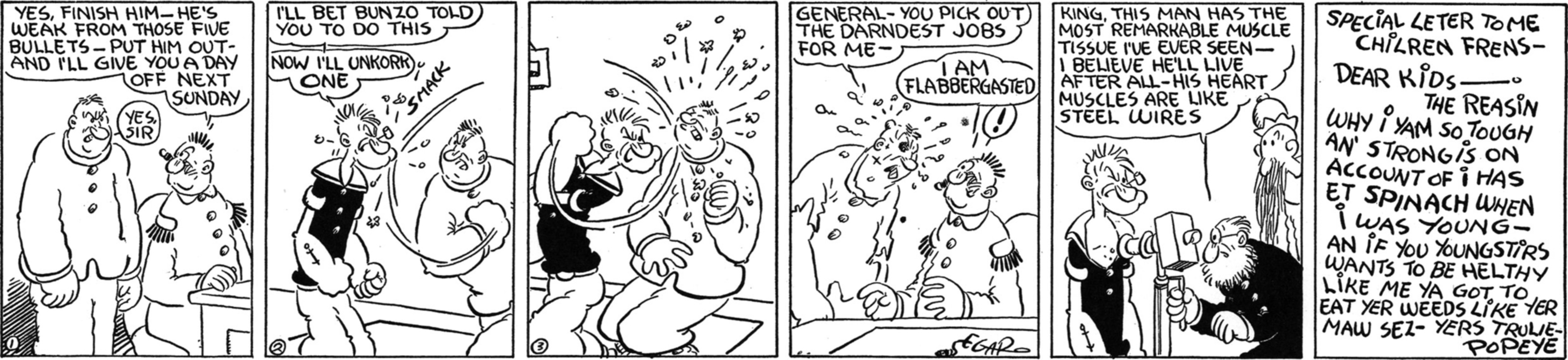
This became somewhat of a running gag for the remainder of the story. Since Bunzo was unable to execute Popeye, he decides to challenge him to a boxing match instead. During the match, Popeye is unfazed by all of Bunzo’s blows, and remarks, “You should eat more spinach.” As the general continues to fail to harm him, Popeye turns to the crowd and says, “Ladies and Gents - Napoleon here, can’t lay me out on account of he don’t eat enough spinach.” The general then decides to try and execute Popeye by firing squad, but even after getting riddled with bullets he is miraculously unharmed. He goes to a doctor to get checked out afterwards, who says, “I thought they executed you!” Popeye replies, “They did, but it didn’t take.” After examining Popeye, the doctor says to the king, “King, this man has the most remarkable muscle tissue I’ve ever seen - I believe he’ll live after all - his heart muscles are like steel wires.” In the final panel of that strip, there’s a note supposedly written by Popeye himself which says, “Special Leter to me chilren frens - Dear kids - The reasin why I yam so tough an’ strong is on account of I has et spinach when I was young - an if you youngstirs wants to be helthy like me ya got to eat yer weeds like yer maw sez - yers trulie - Popeye”
This is most likely the story the Fleisher animators referenced when developing the version of Popeye that would appear in the cartoons. Their reasoning for slightly changing the spinach lore must have been that if spinach made him strong when he ate it years ago, it should continue to make him strong whenever he eats it now. It certainly worked, and it cemented spinach as Popeye’s vegetable of choice.
Popeye has been associated with spinach ever since, and this association has led to some interesting things.
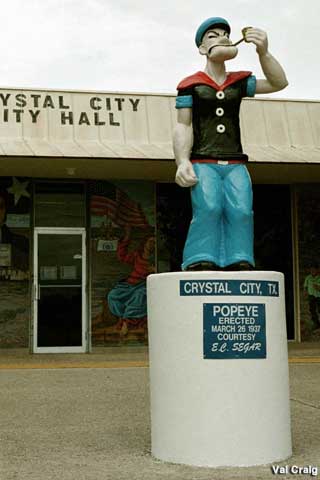
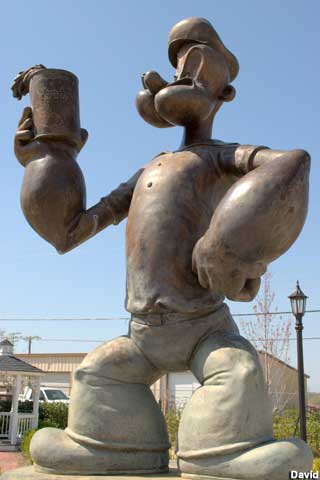
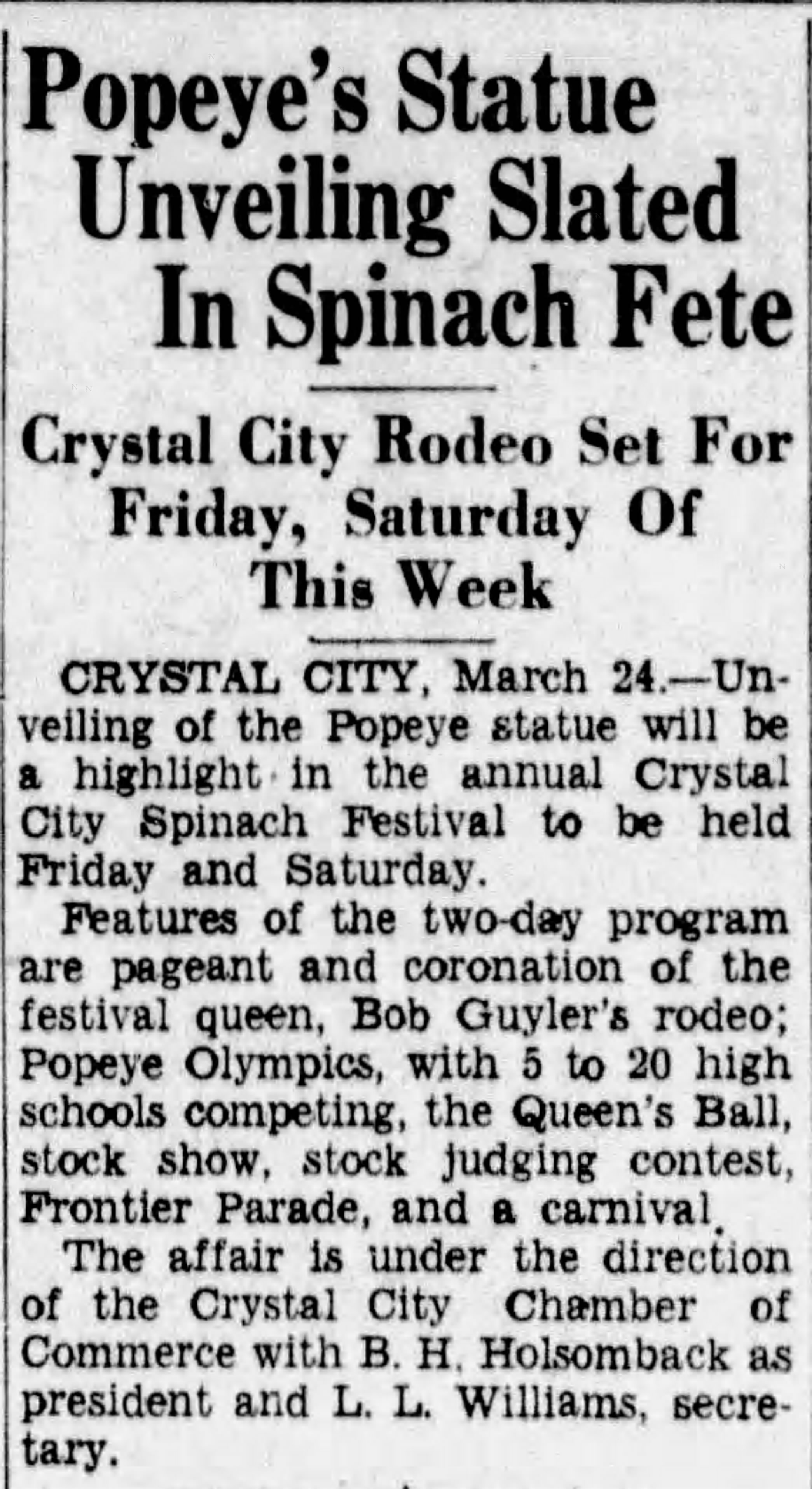
In Crystal City, TX, known as the “Spinach Capital of the World” due to spinach being a major crop grown there, a statue of Popeye was erected in March of 1937 during the city’s annual Spinach Festival. It was meant to honor both the character Popeye as well as the cartoonist E.C. Segar who, it is believed, helped to increase consumption of spinach in the United States in the 1930s (we’ll come back to that fact later) and thus contributed greatly to the economy of Crystal City. While the original statue is now inside city hall, a modern replacement still stands outside the city offices and is a popular tourist attraction.
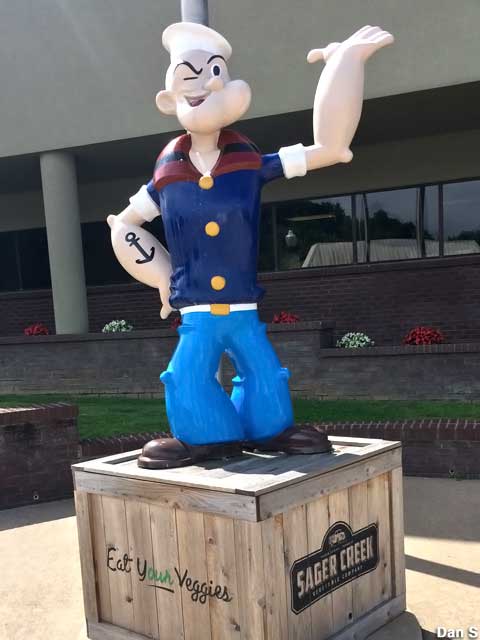
Similar statues of Popeye have been erected elsewhere, in Chester, IL, Alma, AR, Siloam Springs, AR, and Springdale, AR, though the last two are no longer standing. Chester has no association with spinach, though it is the hometown of Popeye’s creator, E.C. Segar. The towns in Arkansas, on the other hand, have a deep connection with spinach, and would end up having a deep connection with Popeye.
The connection between Arkansas and Popeye would not come until a few decades after Crystal City, however.
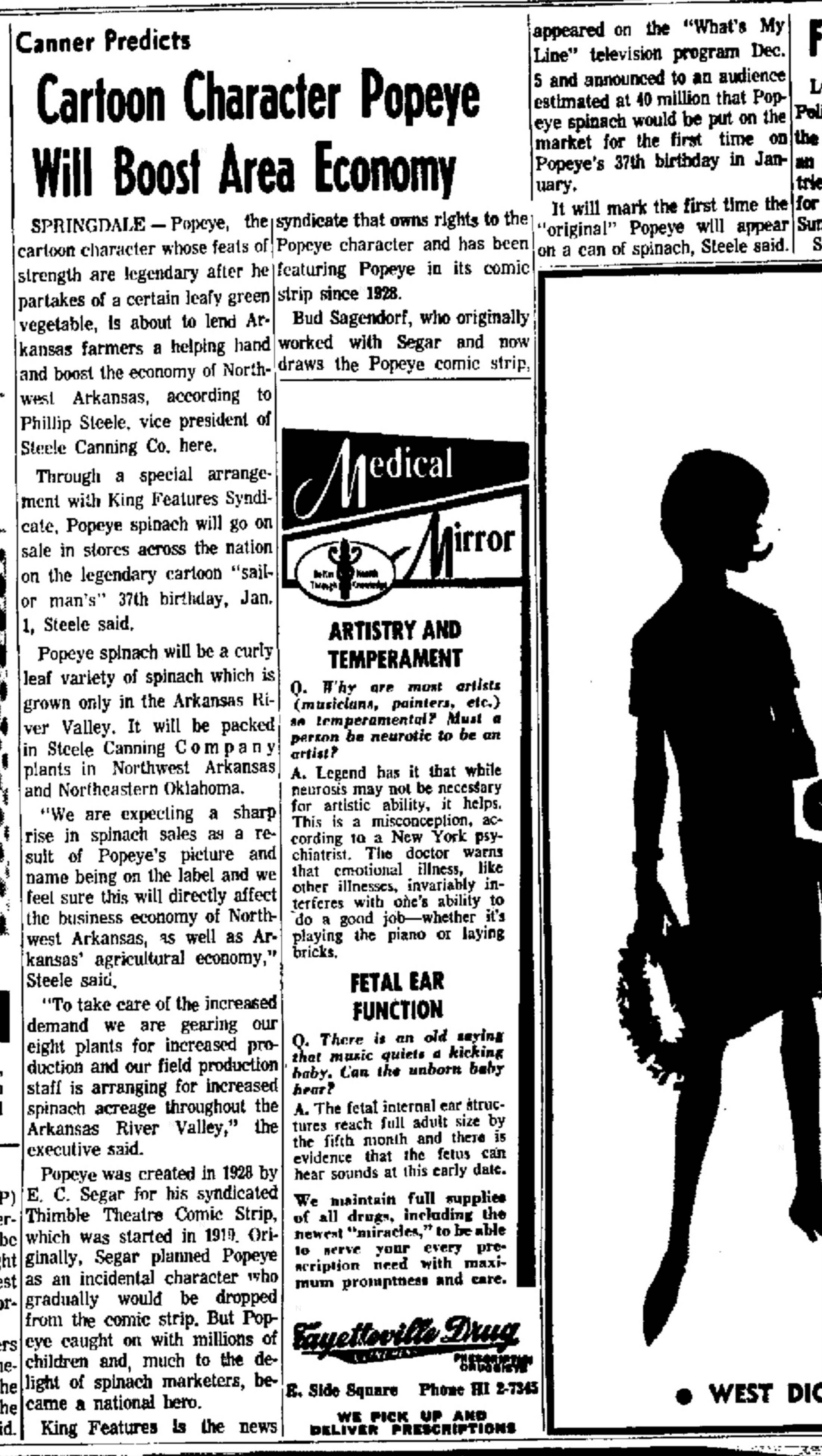
In 1965, the Steele Canning Company, headquartered in Springdale, AR, acquired a license from King Features Syndicate, who publishes the Popeye comic strip, to sell cans of spinach under the Popeye Spinach brand. Despite his long association with spinach, this would be the first time that Popeye actually appeared on any kind of spinach product. Company president Joe Steele and his son Phillip were confident that associating such a popular character with their product would increase spinach consumption, as well as boost the local economy of their city and state, which led them to seek out the license.
And yes, this was an actual, legitimate, officially licensed product, unlike other food products associated with comic strip characters that I’ve covered in the past. In fact, King Features themselves assisted with the marketing campaign, even sending live action Popeye actor Herb Messinger to appear at various events promoting the product. Bud Sagendorf, who was drawing Thimble Theater/Popeye at the time, also appeared on the TV show “What’s My Line” to announce the product’s debut.
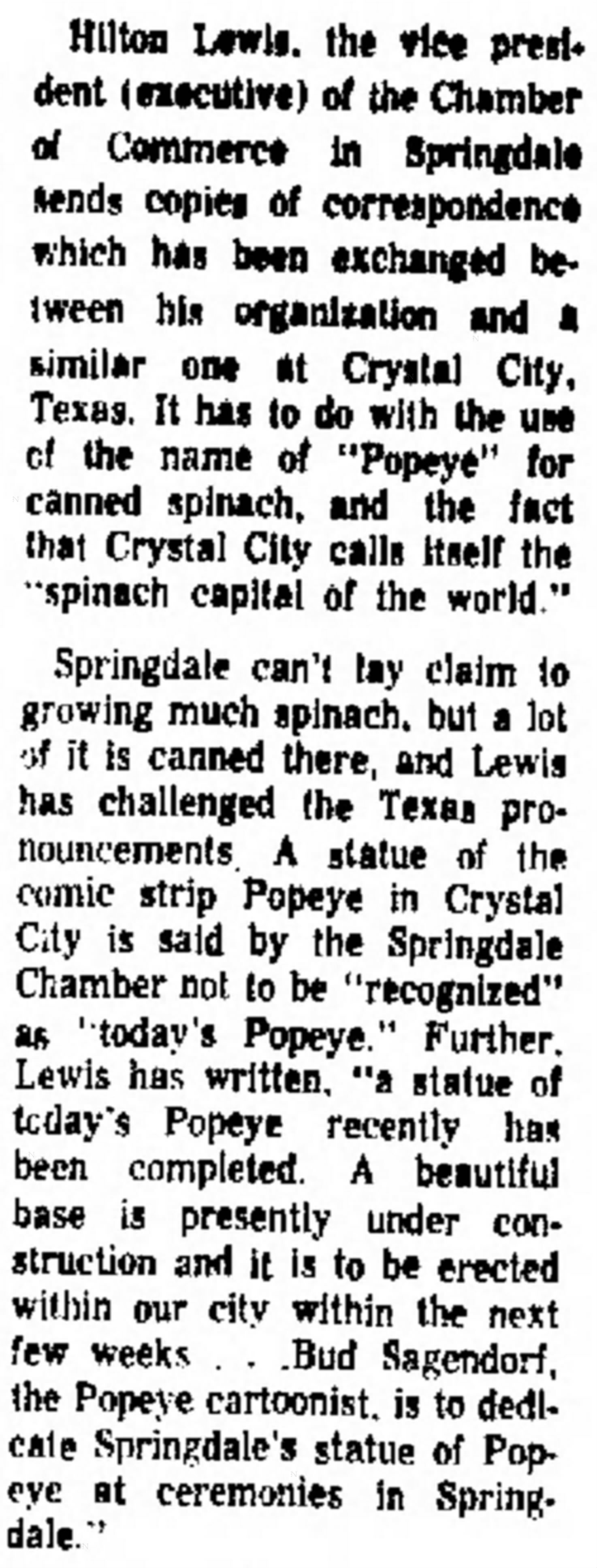
It was also around this time that the Popeye statue in Springdale was first erected, outside of the Steele Canning plant. In fact, the vice president of the Springdale Chamber of Commerce, in announcing the erection of the statue, even mentioned the Crystal City statue, challenging that city’s title as “Spinach Capital of the World.” Lewis said he did not recognize the Crystal City statue as “today’s Popeye,” which is what the Springdale statue would be. Bud Sagendorf was also present for the unveiling and dedicating of the Springdale statue.
Around 1978, two years after the death of Steele Canning president Joe Steele, another Arkansas company, Allen Canning, acquired Steele Canning Company and its Arkansas canning plants. Along with the plants, it also acquired the Popeye Spinach license, and of course the Popeye statue. Allen Canning at its various Arkansas plants was at one point reportedly producing 65% of the canned spinach in the United States, much of which was at its plant in Alma. Thus, the people of Alma decided to be the next to challenge Crystal City’s title of “Spinach Capital of the World.”
In 1987, the town decided to rebrand itself as the Spinach Capital, painting the slogan on their water tower alongside a likeness of Popeye, and commissioning their own statue of Popeye made of papier mache, which was later given a fiberglass coating. This did not go unnoticed by residents of Crystal City. Alma resident George Bowles, one of the men who initially suggested the town be rebranded, received a postcard from a newspaper publisher in Crystal City with “Greetings from the Spinach Capital Of The World” printed on it, an obvious challenge to Alma’s new title. Bowles answered the challenge by sending back a package of Popeye Spinach, along with some Arkansas water and Arkansas soil. This must have been sufficient for the residents of Crystal City, because Bowles received no further correspondence.
In more recent years, the Alma statue has been replaced by a sturdier bronze statue. At time of writing, the bronze statue is still standing, in the middle of a fountain at Popeye Park. The Springdale statue, on the other hand, isn’t. After Allen Canning was renamed Allens Inc, the statue was moved to the corporate offices in Siloam Springs, AR. After the company went bankrupt and its brands were acquired first by Del Monte and later by McCall Farms, the statue was removed completely.
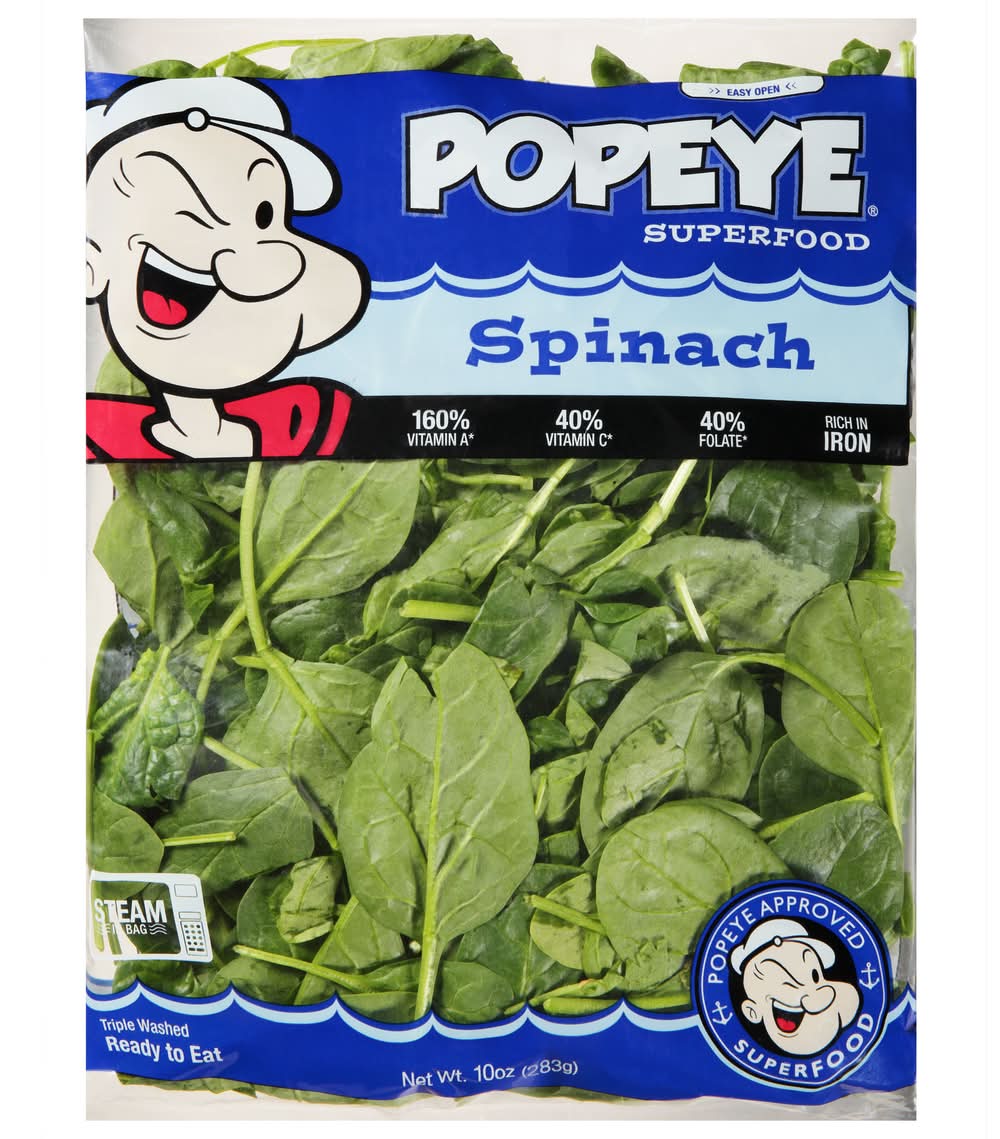
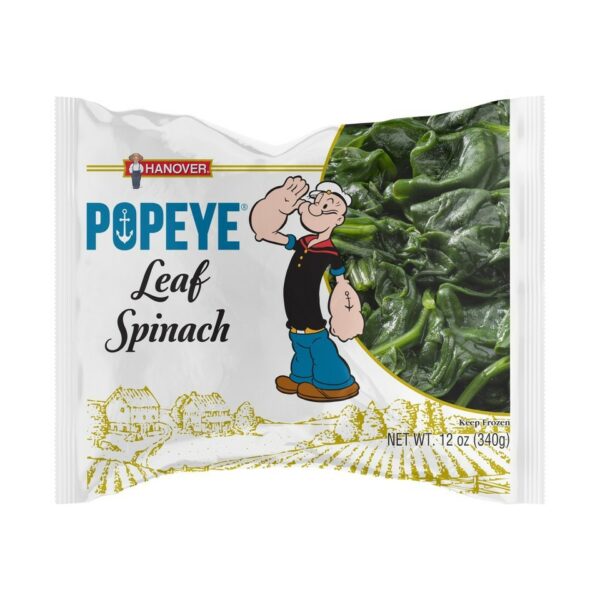
McCall Farms currently owns not only the Allens brand but also the Popeye Spinach brand, cans of which can still be found on grocery store shelves today. But cans of spinach aren’t the only place you’ll find the Popeye brand. While I wasn’t able to find much information about them, other companies have also produced officially licensed Popeye spinach, both fresh and frozen. Popeye Fresh Spinach, branded as a “superfood,” was sold by Taylor Farms, though it doesn’t seem to be around anymore (and given Taylor Farms' recent troubles, I have an idea why). Hanover Popeye Frozen Spinach is still around, and carries an official King Features copyright notice, though it uses a slightly different logo than the canned version, for trademark reasons. I am unaware of either of those companies erecting Popeye statues.
Seeing all that Popeye has done for spinach and for spinach growing and spinach canning cities, you may begin to have the idea that the Popeye character has had some kind of influence on the amount of spinach consumed over the years. The reason for the Crystal City, TX Popeye statue seemed to be to thank the character for doing so. Phillip Steele said he thought the canned Popeye Spinach brand would do so. The full rebrand of the city of Alma, AR seemed to be built on this premise. The claim is even made on the official Popeye website. It says that Popeye has helped to increase spinach consumption by 33%, which is the number I found many people citing in various places.
But is it true?
The evidence suggests that it might not be. While the 33% number is cited quite often, no evidence is ever given for this claim, and it’s also not made clear what time period it refers to, and if the amount of spinach consumption has stayed steady since the increase. I couldn’t find where the 33% number came from, but I did find someone who actually looked at the numbers.
According to this data, between the years of 1915 and 1928, the amount of spinach grown and consumed in the United States grew significantly due to certain public health initiatives from the US government. Since Popeye was not introduced in Thimble Theater until 1929, it would not have been possible for him to have any effect on that. When Popeye began extolling the virtues of spinach in 1931, it’s more likely that this was merely an extension of these already existing public health campaigns, and E.C. Segar was attempting to contribute to them. It probably wouldn’t be correct to say that Popeye did nothing to influence spinach consumption, but it doesn’t seem right to say he did it all on his own. The most telling point to me is how the acreage devoted to the growing of spinach increased prior to Popeye’s introduction. Since there was already a much larger supply of spinach than there had previously been, it only stands to reason that the consumption of said spinach would be at least somewhat higher. By the time the Crystal City Popeye Statue went up, it seems likely that the spinach growers there were benefitting more from a couple decades of government agricultural initiatives and less from a comic strip character.
The numbers look even worse the farther into the 20th century we go. By the time Steele Canning introduced Popeye canned spinach, consumption of it was clearly in decline, and would continue to decline for the remainder of the century. While I imagine people would be more likely to buy a can of spinach if it had a popular, well-known character on it, the fact was that they were not necessarily likely to buy it in the first place.
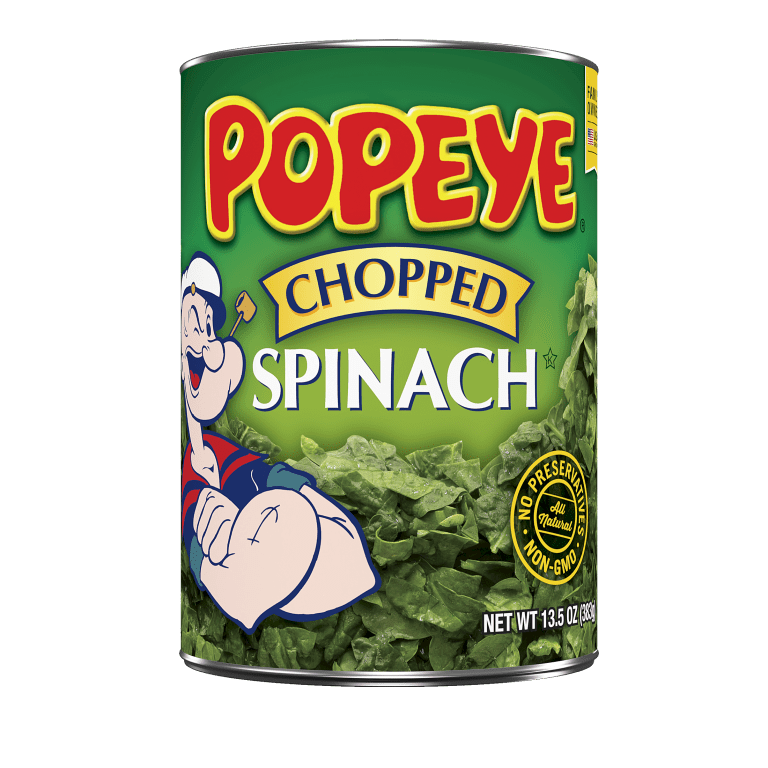
Finally, speaking of buying cans of spinach, in preparation for writing this post, I actually bought some Popeye brand canned spinach from my local grocery store because I realized I had never eaten canned spinach before. After trying some, I don’t believe I will ever be purchasing it again. I like spinach if it’s fresh, though I’ve never liked it cooked, and canned spinach tastes about as bad to me as any cooked spinach I’ve ever had. There was also a recipe on the back of the can for “Easy Spinach Dip,” which I made in an attempt to get some better use out of the rest of the can. I had to buy another can, since the recipe called for two. The dip seemed to be designed to mask the flavor of the spinach, though I don’t think it does a very good job of it. It was certainly easy to make, but not necessarily easy to eat. I would like to find some of the Hanover Popeye frozen spinach and try it as well, to see if it’s any better. It would probably make for better spinach dip, at least. Unfortunately, I haven’t been able to find it where I live. I’ll have to settle for non-Popeye spinach for the time being.
Last month, while researching Dinty Moore specifically and Bringing Up Father generally, I came across a phrase I hadn’t heard before, “Jiggs Dinner.” Like Dinty Moore, it was apparently also derived from the work of George McManus. Unlike Dinty Moore, it’s not very widely known outside of a very specific area, that area being Newfoundland, Canada, but it is quite well known within that area, among other places.
Jiggs Dinner (or sometimes Jiggs' Dinner), in current day Newfoundland, is a dish consisting of a base of corned (or salt) beef and cabbage and some other greens, various root vegetables such as potatoes, carrots, and turnips, and a side of pease pudding. Other vegetables of various sorts can also be added if one wishes. Similar dishes can be found in the United States, such as New England Boiled Dinner, which is essentially the same but without the pease pudding, and in Ireland, where they have Bacon and Cabbage, which again is essentially the same but with a different meat. The Irish variety was most likely the precursor to these types of meals, as it’s thought that Irish immigrants to the United States and Canada, not being able to afford bacon, would substitute the more readily available corned beef, and thus invented the American version of the Irish classic. Newfoundland has a large population of people of Irish descent, so it stands to reason that such a meal would endure as a tradition among them.
Of course, it also stands to reason that, in the early 20th century, they would be quite fond of a newspaper comic about an Irish immigrant who loves corned beef and cabbage.
As stated in the previous post, Bringing Up Father was known worldwide in its heyday, and its two main leads, Jiggs and Maggie, were so well known that most people referred to the strip by their names rather than by its title. Jiggs' penchant for going to Dinty Moore’s cafe and having a bite of corned beef and cabbage was also well known, of course. To the consternation of the cartoonist, George McManus, it was also assumed that he was just as fond of it as Jiggs was. This was only partially true. In the Collier’s Magazine article referenced in the previous post, he states that, “It is true that, like Jiggs, I have some fondness for this simple and succulent dish. But I can take it or leave it. Through the years, I have become rather selective about it, because it has been rammed down my throat on every possible occasion from Maine to California. Does McManus come to town on a King Features promotion tour? Every place he visits has stockpiles of corned beef and cabbage waiting.”
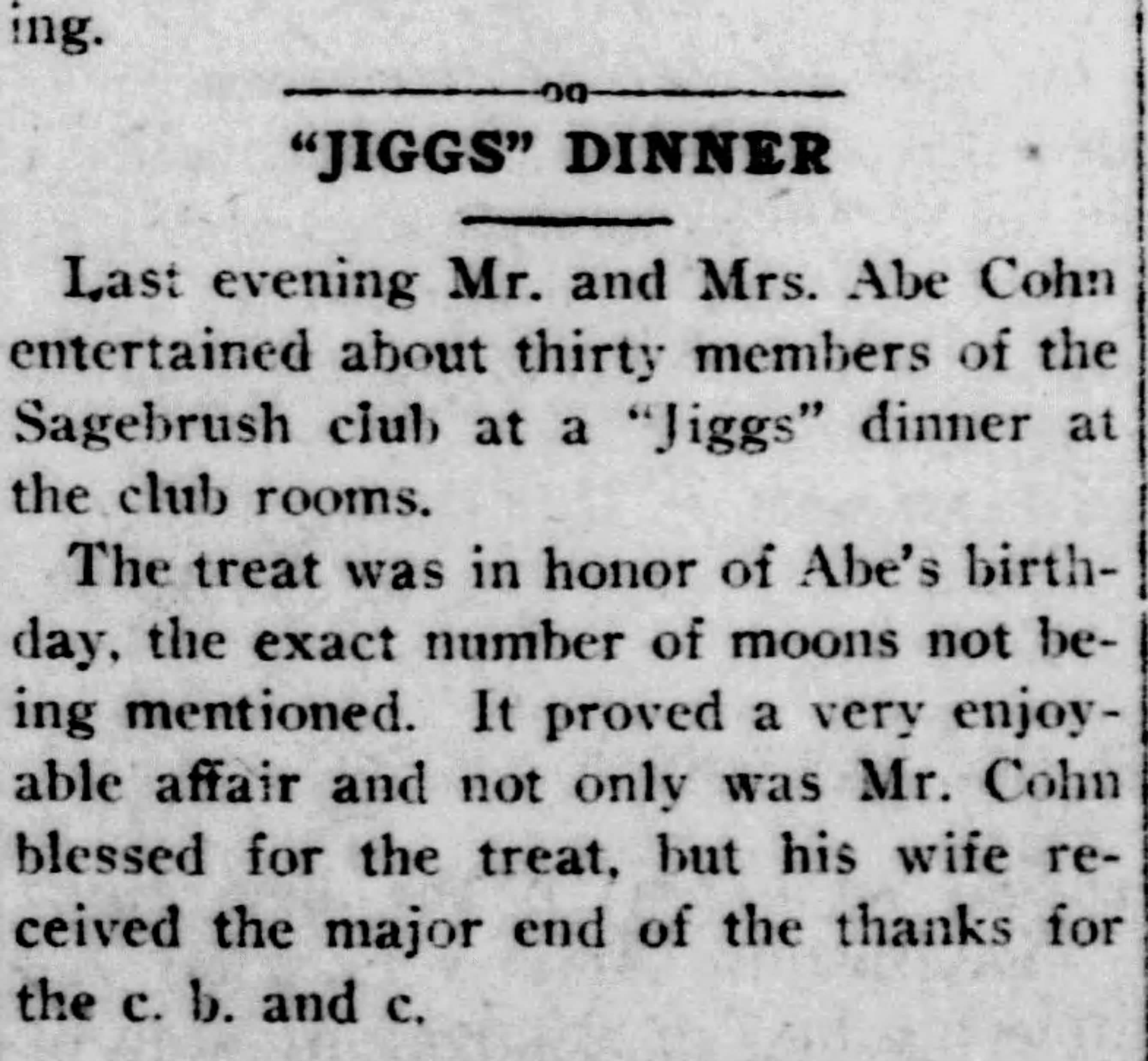
Due to the clear association between Jiggs and corned beef and cabbage (or “C.B. and C.” as I often saw it abbreviated in old newspapers), it didn’t take long for people to start referring to the dish as simply “Jiggs Dinner.” The earliest article I could find which referenced Jiggs Dinner was from a New Brunswick, Canada newspaper in 1918, where it states that a certain business executive had been “host at a Jiggs dinner at his summer home.” The lack of explanation of what a Jiggs dinner is implies that readers would have already been familiar with the term by that time, which is interesting, given that Bringing Up Father had only debuted 5 years prior.
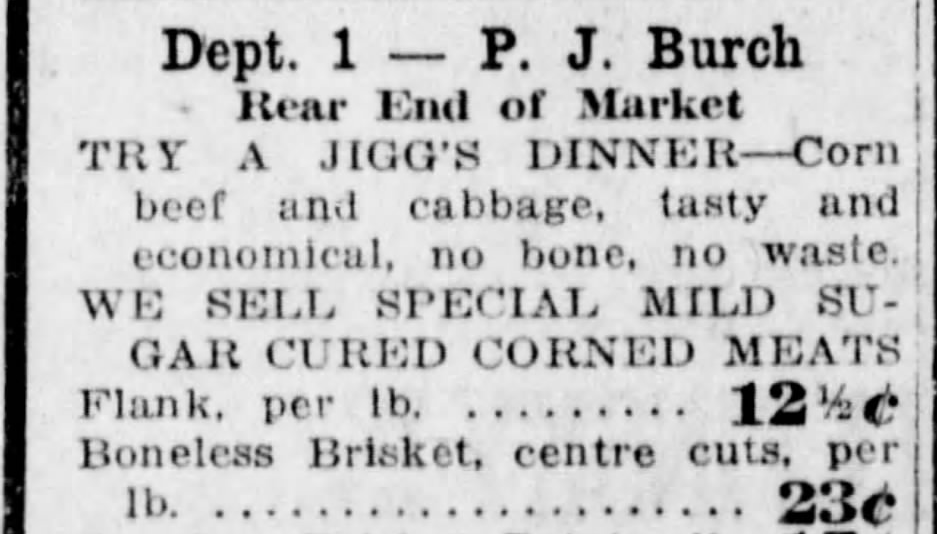
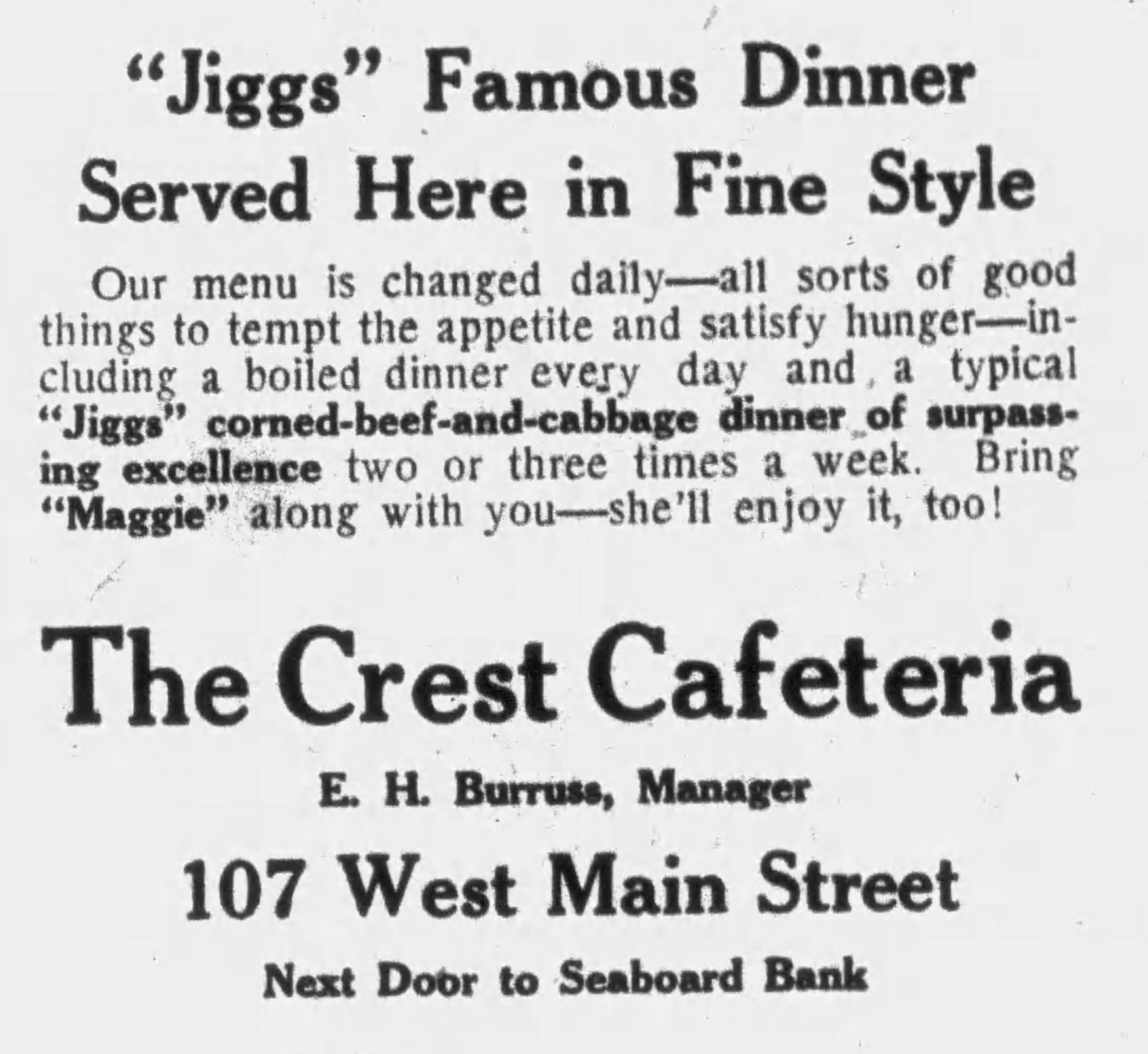
However, the term was not confined only to Canada at this early stage. I found the term in many American newspapers across the country in the 1920s, either reporting that someone had hosted a Jiggs dinner or was planning one, or advertising meat markets, grocery stores, and restaurants where one could buy one (my favorite of these being from a restaurant in Norfolk, Virginia which advertised a Jiggs dinner “of surpassing excellence”).
Of course, at that time the term referred only to the corned beef and cabbage itself, not necessarily to a meal with corned beef and cabbage in it. Still, it’s fairly easy to see how, given that the dish is centered around corned beef and cabbage, Newfoundlanders would also refer to their traditional dish in the same way. Since the 1930s and 1940s, I found that the term began to be used less and less outside of Canada generally and Newfoundland specifically, though it hasn’t gone away entirely. Judging by current newspapers at least, it’s still a popular way to refer to corned beef and cabbage in the Midwestern United States, most especially Ohio.
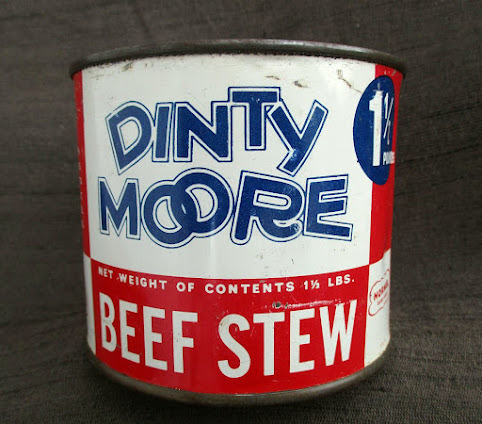
Once again, coming to you from the “I had no idea how complicated this would be when I started” department, we have Dinty Moore, the well known brand of canned soups and stews from the Hormel company. The Dinty Moore brand has included a number of different Hormel products over the years, but the best known is, of course, the beef stew. Some in the know, such as myself, may be aware that a comic strip character of the same name existed prior to the launch of Hormel’s brand, but even they may not know exactly how the name made it from the newspaper onto the can. I certainly wasn’t aware of all the complexities, until now.
In 1913, cartoonist George McManus launched the comic strip “Bringing Up Father,” which he wrote and drew for William Randolph Hearst’s New York American newspaper, and which was syndicated to newspapers across the country by what would later become known as King Features Syndicate. While it isn’t well remembered now, it was very popular in its day, and by the end of its first decade had already spawned several stage plays, live action and animated movie shorts, and multiple reprint book collections. By the time McManus died in 1954, the strip had been syndicated and reprinted in book form worldwide, there had been several live action movies, and McManus had earned over 12 million dollars from the strip. In short, the strip and its characters were very widely known around the world in the early to mid 20th century. After 1954 it was taken over by one of his assistants, Zeke Zekley, and ran all the way to the end of the century, ending in 2000.
The strip mainly revolved around a family of Irish-Americans, comprised of the titular father Jiggs, mother Maggie, and daughter Nora. In many places, these characters were more well known than the title of the strip, prompting many to simply call it “Jiggs and Maggie.” This was also the title given to a number of the live action movies, such as “Jiggs and Maggie In Court” and “Jiggs and Maggie Out West.”
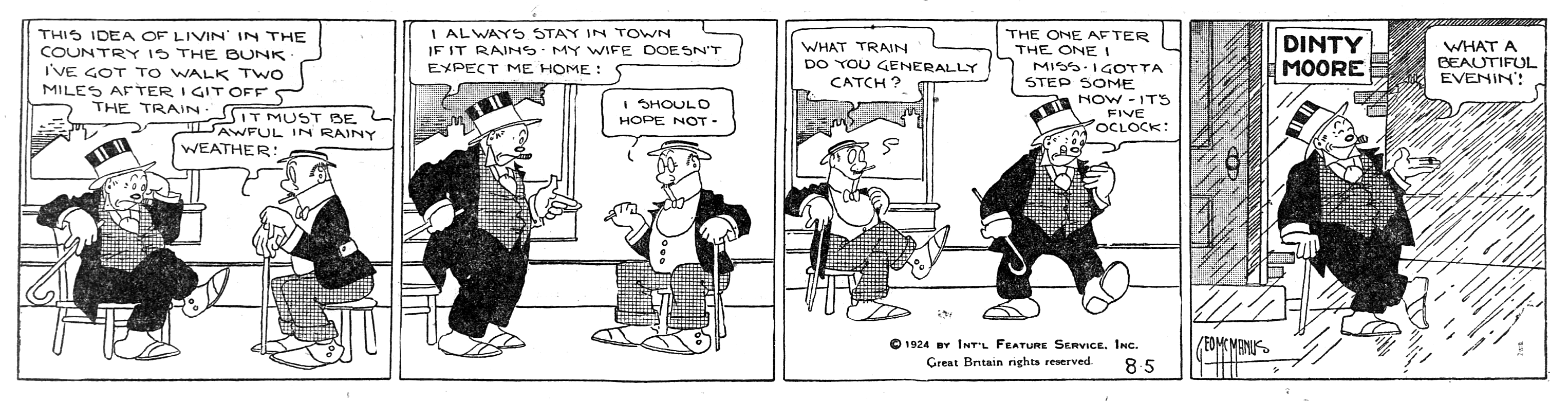
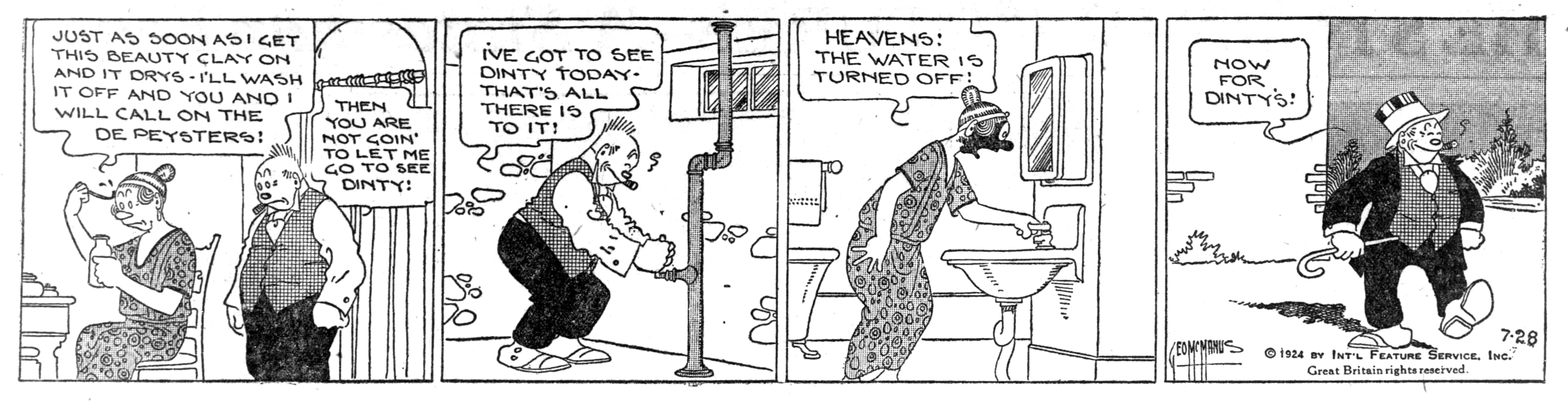
While they had come from a working class background, Jiggs and Maggie had come into possession of a large amount of wealth, and the strip chronicles their struggles with adjusting to the new lifestyle that said wealth brings with it. Maggie and Nora both excitedly take to the high society life, while Jiggs is dragged kicking and screaming into it. Many of the strip’s gags revolve around Jiggs trying to continue to be his working class self, and cavort with this working class friends, to the embarrassment of his wife and daughter.
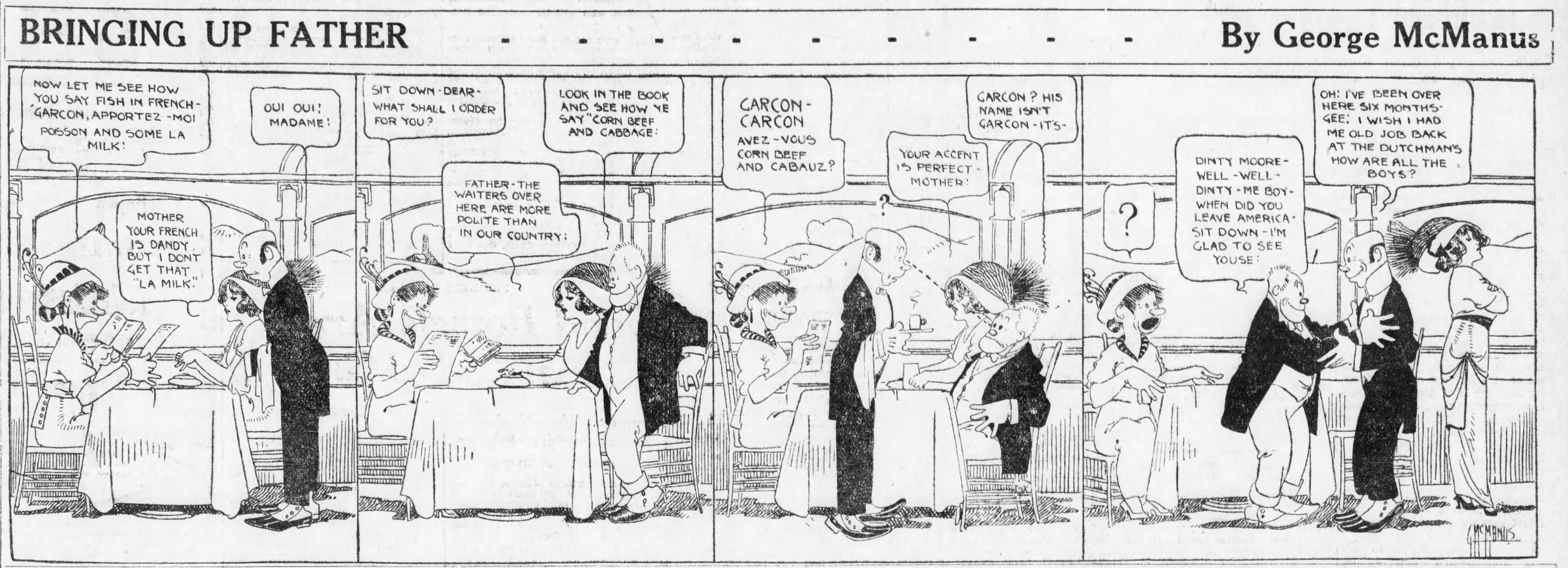
One of the other major recurring characters that everyone knew was, of course, Dinty Moore. In order to get away from high society life, Jiggs would most often attempt to abscond to the local restaurant and pub owned by Dinty, who was his friend. In his first appearance in 1913, Dinty was a waiter at a fancy restaurant in France. There was a series of strips that recounts the family’s trip to Paris, and in one of them they visit said restaurant. Jiggs recognizes the waiter as one of his friends, Dinty Moore, and is excited to see someone he knows from America. Maggie and Nora, on the other hand, were disappointed they weren’t able to impress a local waiter with the French they had learned. Dinty would somehow make his way back to America, and end up running the pub near where Jiggs and family lived.
In an article he wrote for Collier’s Magazine in 1952, George McManus recounted how he came up with the character of Dinty Moore. As a young boy, McManus had known an Irishman who worked as a bellhop at a hotel in St. Louis, and who was named Dinty. He remembered and used this name when he created his new character, and gave him the last name Moore, because “it seemed to go with it.”
However, there was another man George McManus knew who had a different idea of where the name and the character came from.
McManus was a frequent patron of a restaurant in New York owned by two brothers, William and James Moore. McManus was acquainted with James, who was familiar with his various comic strips. In the aforementioned Collier’s article, McManus even states he had introduced several of his friends to the restaurant, including people he worked with at the newspaper. Moore had never spoken with McManus much, but as soon as Moore saw there was a character in the comic strip called Dinty Moore and who owned a pub, he immediately assumed it was a reference to him. The Collier’s article doesn’t make it clear whether McManus confirmed or denied this to Moore, but either way, Moore did not hesitate to use it as a marketing tool. He changed the name of the establishment to “Dinty Moore’s” and also started calling himself Dinty Moore, after the character. Either due to the association with a popular comic strip, or due to Moore’s marketing prowess, or both, it became a very popular place for anyone visiting that side of New York to go. During Prohibition, it was well known as a speakeasy, and was frequented by various celebrities, as well as the police, though not always for the same reasons.
Due to the popularity of the New York restaurant, and the comic strip, other Dinty Moore’s restaurants began opening in various places in the country as well. Some sources claim that James Moore himself opened up a chain of them, though many of them seem to be unrelated. I couldn’t find any evidence to suggest he was aware of all of them, but King Features Syndicate certainly was. An article I found from the Winchester (KY) Sun recounts the tale of two brothers who bought a restaurant there and renamed it Dinty Moore’s, but in order to do so had to get permission from the syndicate (then called International Feature Service). I couldn’t find much in the way of legal challenges to these restaurants, but it’s clear that it did happen.
In a certain case, however, it did not seem to happen at all, and that case is what would lead to the canned stew.
In 1888, Charles Witt opened up a new grocery store in Minneapolis, MN called “Witt’s Market House.” In 1919, it moved to a new location, where it would stay until it closed down in 1968. Witt’s store carried all types of grocery items, but they specialized in meat products. After Witt came up with a new method of curing hams using brine and a “secret solution”, in 1925 they began marketing these hams under the brand name Dinty Moore. Witt’s became an institution in Minneapolis at that time, and Dinty Moore hams became their signature product. It wouldn’t take long for them to start marketing other meat products under the Dinty Moore brand as well, and by 1935 the name Dinty Moore was firmly associated with meat in the minds of much of the populace of Minneapolis. Witt even had the Dinty Moore name trademarked for use with marketing meat products.
Roy Witt, one of Charles' sons, was friends with Jay Hormel, the son of George Hormel, founder of what would later become known as the Hormel Foods company. One day in 1935, as Jay was showing Roy their new warehouse in Austin, MN, he mentioned the fact that a government contract to can beef had fallen through, leaving them with a bunch of empty cans they had nothing to do with. Roy suggested that instead of just canning beef, they add some vegetables and turn it into stew, and even suggested he use Witt’s Dinty Moore brand to market it. An agreement was made between Hormel and Witt, and Dinty Moore Beef Stew was born. Witt’s never expanded beyond downtown Minneapolis and eventually had to close due to lower and lower demand for their products, and the Dinty Moore trademark was eventually fully taken over by the Hormel company. The brand has continued ever since, and it’s difficult to go to the soup aisle of any grocery store and not see it.
Now, I don’t have definitive proof of where Witt got the name Dinty Moore from, or why they decided to market their meat products under that name. I couldn’t find any statements from Charles Witt or his sons about how they came up with it. However, I feel that the uniqueness of the name, the popularity of the comic strip, and the heavy association of the name with restaurants and food makes it very easy to connect it to the comic strip character. The name was definitely in the zeitgeist. Hormel, of course, didn’t take it directly from either the comic or the restaurant, but Witt most likely did take it from one or both of those things, and passed it on to Hormel. Also, while it seems like they shouldn’t have been able to trademark the name if they had taken it from someone else, as we saw with Skippy, trademark law in those days was not nearly as robust as it is now.
Thankfully, unlike Skippy, this story doesn’t have any kind of tragic ending for the cartoonist. McManus never owned the copyright to the strip or to the characters, so he never felt the need to litigate. In my research, I found references to legal challenges from King Features, but I wasn’t able to find when any of these challenges took place, so I’m skeptical of their existence. Even if they did happen, clearly they didn’t amount to anything, and since King Features has never sold any food products, the court would most likely rule they weren’t in direct competition. For McManus’s part, Bringing Up Father made him a very wealthy man, and though he lost much of his fortune in the 1929 stock market crash, he had gained it all back by the time of his death in 1954.
…
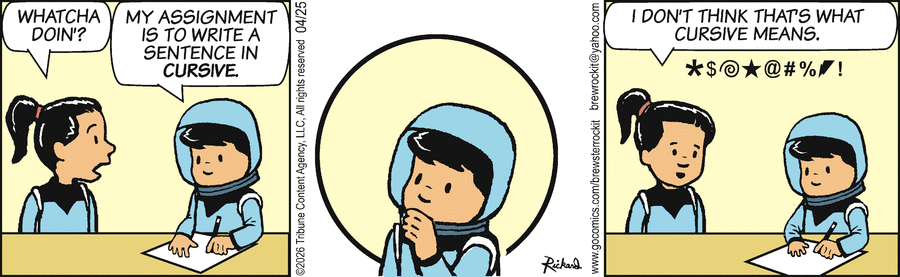
In times past, when I’ve covered words or phrases that originated in a comic strip, generally they had a major effect only on the English language, and sometimes only American English. This time, however, we have something that appears to have affected multiple cultures and languages across the world, even while still remaining entirely unpronounceable. Everyone has seen it, and it’s immediately recognizable. It’s a series of punctuation marks and symbols that indicate someone or something is emitting profane or vulgar language (for example, “@&%$!"), which these days is most commonly known as a grawlix.
The first appearance of a grawlix, that we know of, was in a strip called Lady Bountiful, drawn by Gene Carr, published on November 1, 1901. Ruldolph Dirks, creator of the Katzenjammer Kids, is often cited as the first to use a grawlix, but examples of this in Dirks' work can’t be found until a year after the Lady Bountiful strip. However, the popularity of the Katzenjammer Kids was certainly instrumental in popularizing its use. Given that one of the main characters of the strip was a ship captain, and the strip would often feature other characters who were sailors, they cursed just like them, too. Such cursing would, of course, be “censored” by the grawlix.
In the earliest uses, all types of symbols were included, not just punctuation marks, though the exclamation point was very common and was generally expected to appear. Other common symbols were five-pointed stars, spirals, skulls, and in the case of Dirks' sailors, an anchor. Grawlices have mainly been used in comic strips with a more humorous tone; they have always exuded a certain air of whimsy, so they may seem out of place in a strip with more serious drama. Still, they can bring a more fun and comedic air to an action and adventure strip, and cartoonists such as Harold Gray, in Little Orphan Annie, and Chester Gould, in Dick Tracy, were not afraid to employ them from time to time.
It wouldn’t take long for this to become a convention in not only newspaper comics, but also comic books. In the modern age, it seems the grawlix has broken free of comics entirely, and can often be seen in various textual media, everywhere from published books to social media posts. While I’m not an Internet historian, I can also imagine it being very useful even from the early days of the Internet, back when the only way to send information of any kind was through the use of text. Further, because of the nature of it, the grawlix isn’t restricted to use within any particular language. People around the world are able to use it and still be understood. In fact, the official emoji for an angry person using profanity (🤬) (officially known as “serious face with symbols covering mouth”) has a censor bar with a grawlix on it.
But where did the word “grawlix” come from?
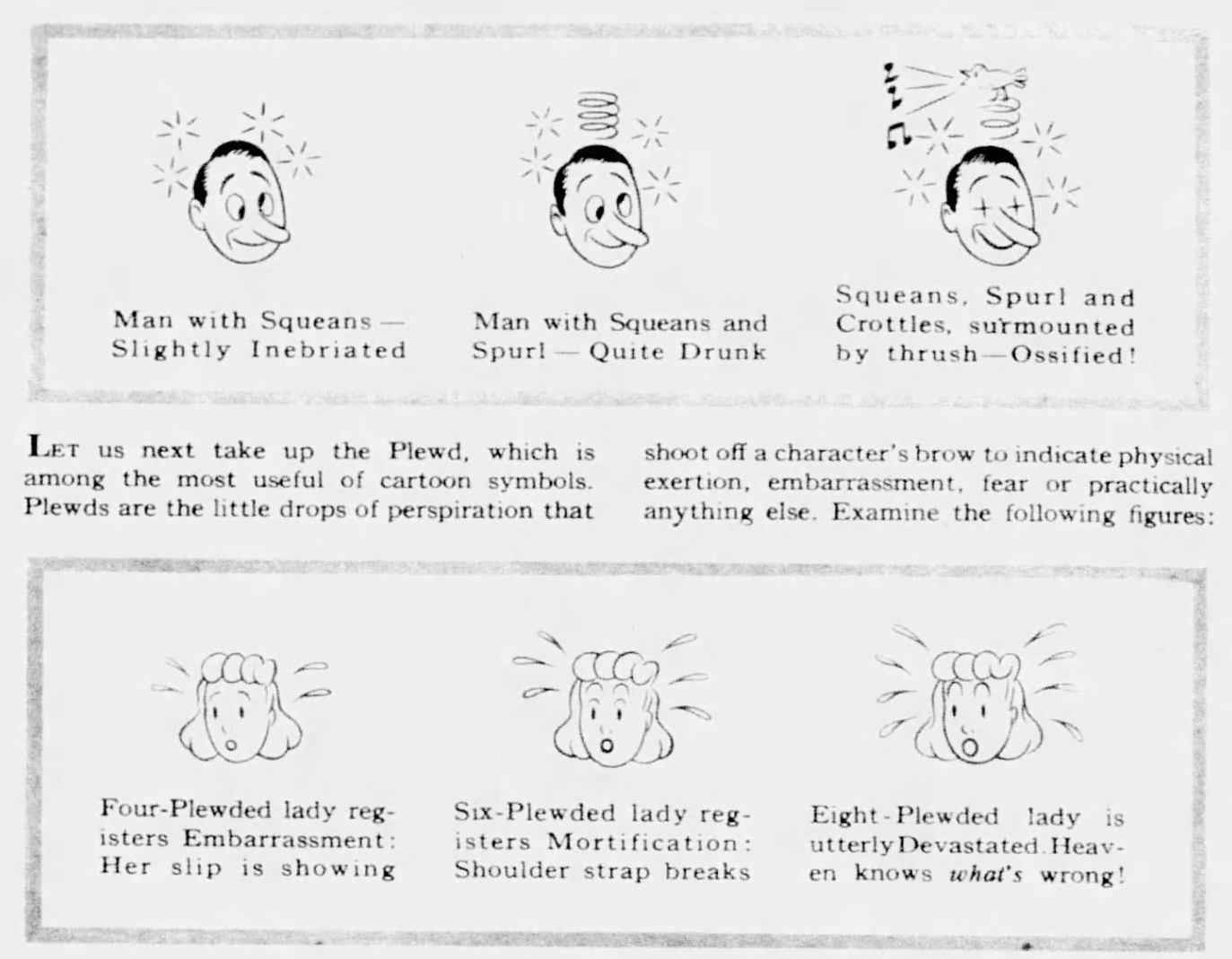
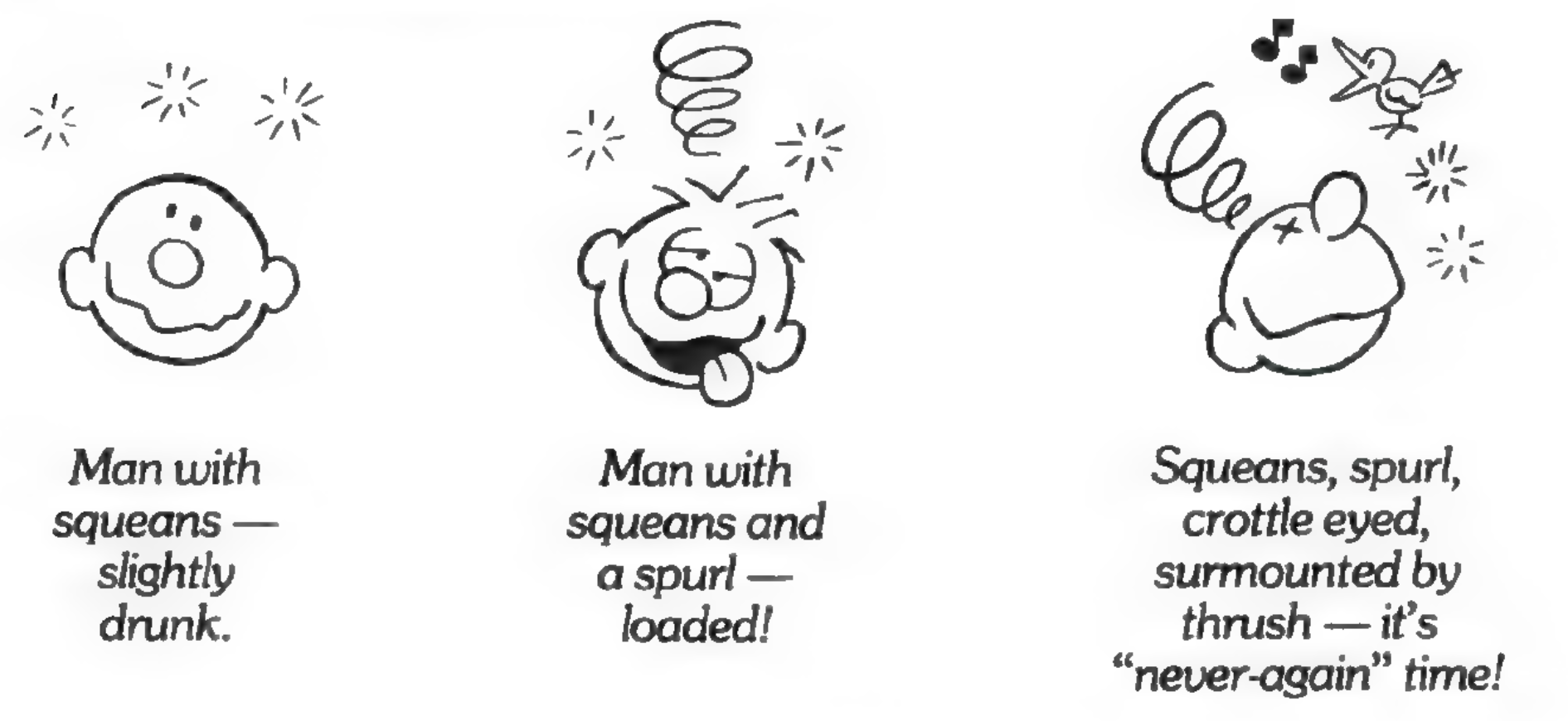
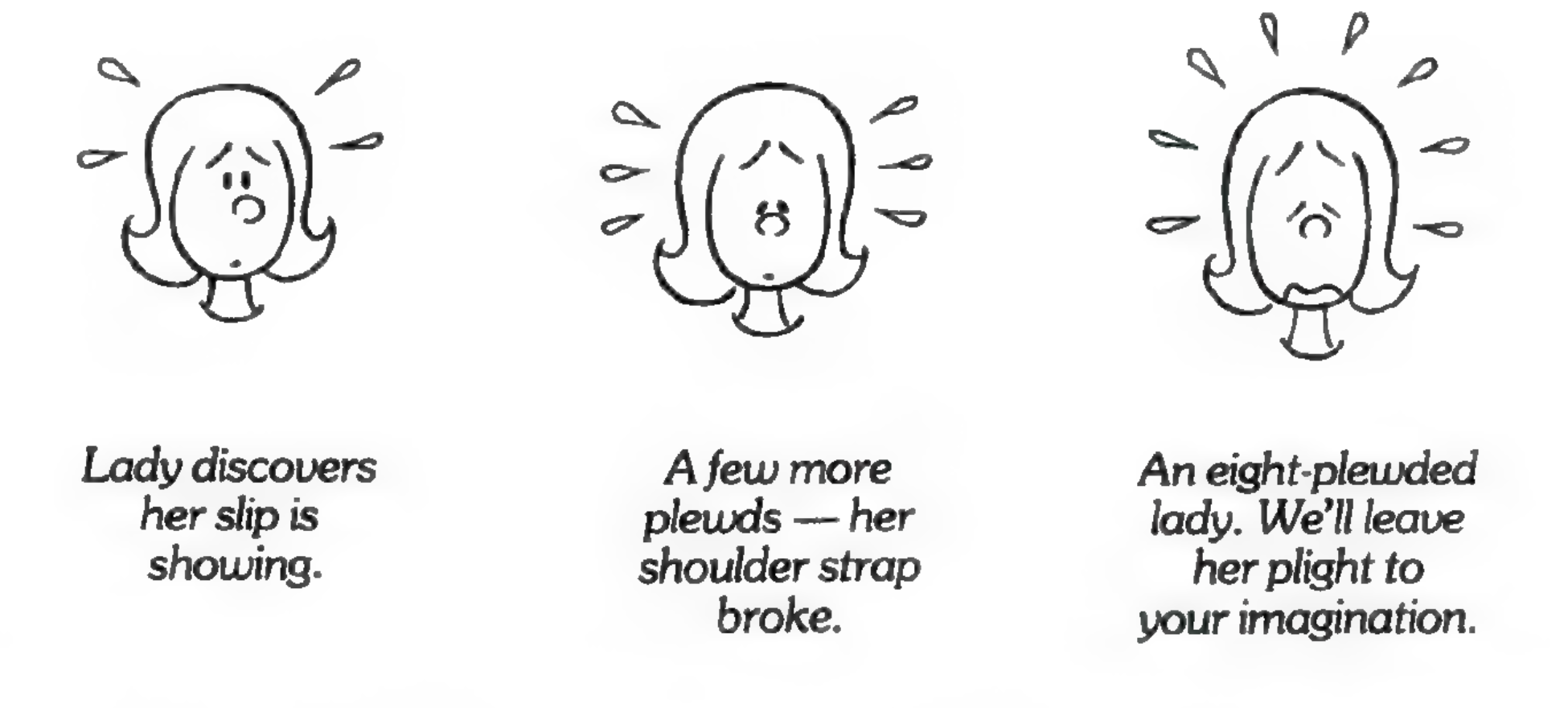
In 1946, columnist Charles Rice in the newspaper supplement tabloid This Week wrote a humorous column titled “Squeans, Plewds, and Briffits, or How to Be A Cartoonist,” in which he presented several visual conventions of comic strips along with the names of such. The column was written in a way that suggested these words already existed and were in use among cartoonists, though Rice had made them all up himself. There was, however, no mention of a grawlix in Rice’s column. At that time and since, one can find others using words and phrases such as “cursing characters” or “obscenicons,” but “grawlix” had not yet been invented.
Enter Mort Walker.
Clearly inspired by Rice’s column, Walker, creator of Beetle Bailey, wrote a column for the National Cartoonists Society magazine The Cartoonist entitled “Let’s Get Down To Grawlixes.” This column, published in 1964, cites Rice as an inspiration and includes all of the words he coined in his article for This Week, but goes even further by coining terms for many other visual conventions of the comics medium, including the grawlix. Of the grawlix, Walker wrote:
> A variety of acceptable curse words are at the cartoonist’s disposal. He may throw in a new one from time to time, but the real meat of the epithet must always contain plenty of jarns, quimps, nittles, and grawlixes, as shown.
In his book Mort Walker’s Private Scrapbook, Walker says this article was originally meant to only be a joke, but his son Brian convinced him to expand the idea into an entire book. In 1980, this would become the seminal reference work for all of these comic words, The Lexicon of Comicana.
As a side note, despite citing Rice as an inspiration in the The Cartoonist article, in Private Scrapbook Walker claims to have invented all of the words he included in the Lexicon which, as has been shown, is not true. Many of the words both in the The Cartoonist article and in the Lexicon were borrowed from Rice, and in the Lexicon Walker even recreated Rice’s illustrations of plewds and squeans, complete with Rice’s captions. That said, in his book Backstage At the Strips, Walker begins by writing, “If the stories in this book are not exactly told the way they happened, it’s the way they should have happened if God had been a better gagwriter – or if I’d had a better memory.” So I guess that applies to Private Scrapbook as well.
But I digress. In The Lexicon of Comicana, in a section of the book titled “Maladicta,” Walker introduces the grawlix and its relatives in a way similar to their introduction in the The Cartoonist article:
> Even in today’s permissive society many four letter words are not permissible in the comics. Even though profanity may be used in other sections of the paper, people feel that, since children read cartoons, the comic section should be inviolate. Cartoonists, therefore, have had to develop acceptable substitutes. A first sergeant would lose a lot of his charm if he said, “Gee whiz, Beetle. You make me so terribly mad!” So the creative mind came up with a variety of “jarns,” “quimps,” “nittles,” and “grawlixes” to help convey a sergeant’s strong emotion and add color and dimension to his personality.
It’s interesting to note that, in both the The Cartoonist article and in the Lexicon of Comicana, Walker names a number of different profanity replacements consisting of various shapes and symbols, the grawlix only being one of many. A jarn appears to include only spiral type shapes, a nittle includes various star shapes, and a grawlix appears to only consist of formless squiggles. Yet, “grawlix” would be the word that would come to describe all of these varying maladicta over the course of time. This may have been because it’s the most interesting and memorable of the words, or perhaps because Mort Walker himself decided to lump them all together at some point. I can’t be sure.
Whatever the reason, by 2018 dictionaries had begun to take notice of widespread enough use of the word that they started including it. Webster’s added it in 2018, the official Scrabble dictionary added it in 2022, and the venerable Oxford English Dictionary added it in 2025.
For more information:
Obscenicons A Century Ago and More on the early days of obscenicons at Language Log
Grawlixes Past and Present by Gwillim Law
Charles Rice’s column in This Week at Weird Universe
Backstage At The Strips and Mort Walker’s Private Scrapbook at The Internet Archive
What the @#$%&! Is a Grawlix? at ThoughtCo.
What the #@*% is a ‘grawlix'? at Merriam-Webster
Why Cartoon Characters Curse Like This at the Vox YouTube channel
Grawlix and the Lexicon of Comicana at A Way With Words
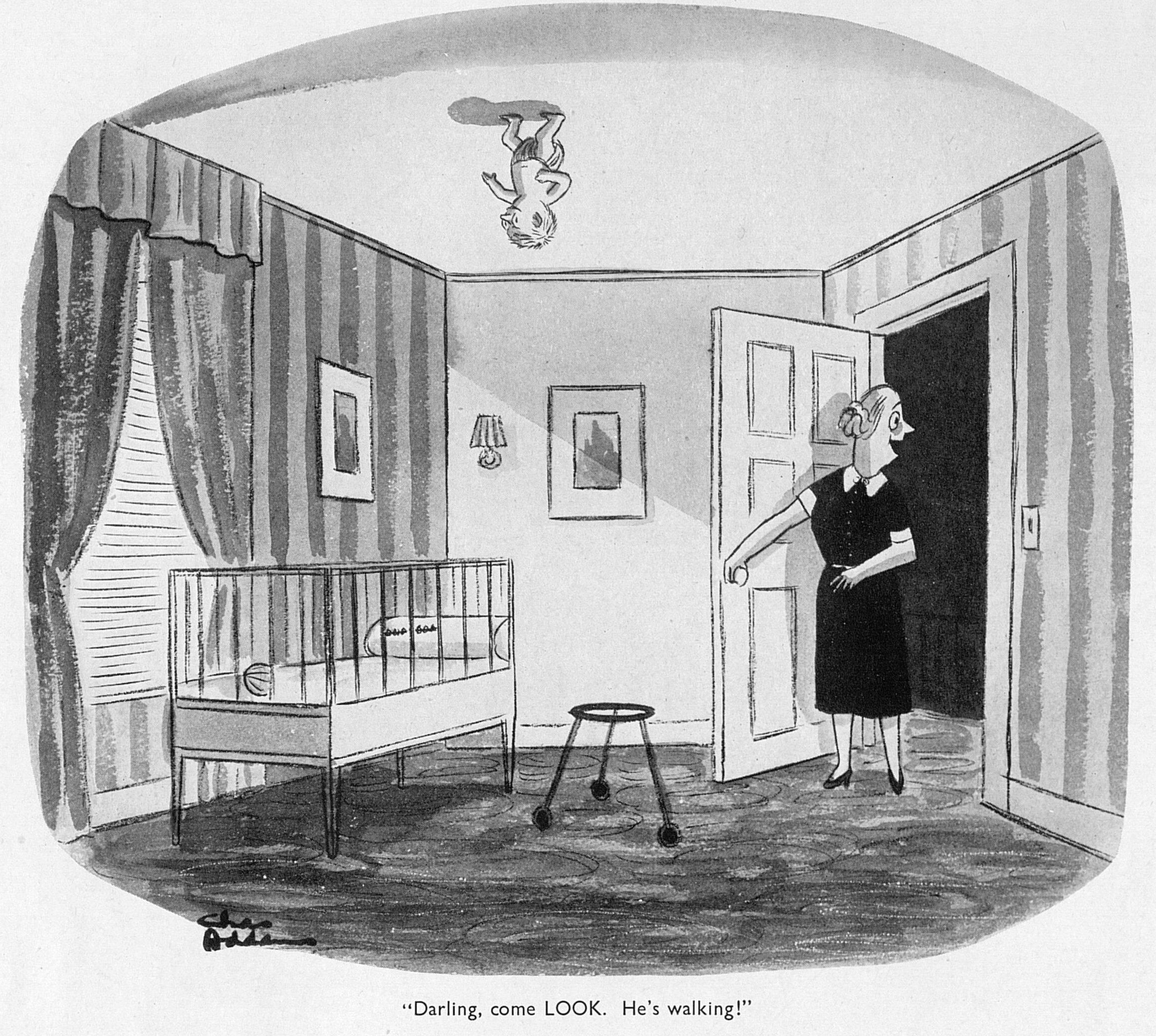
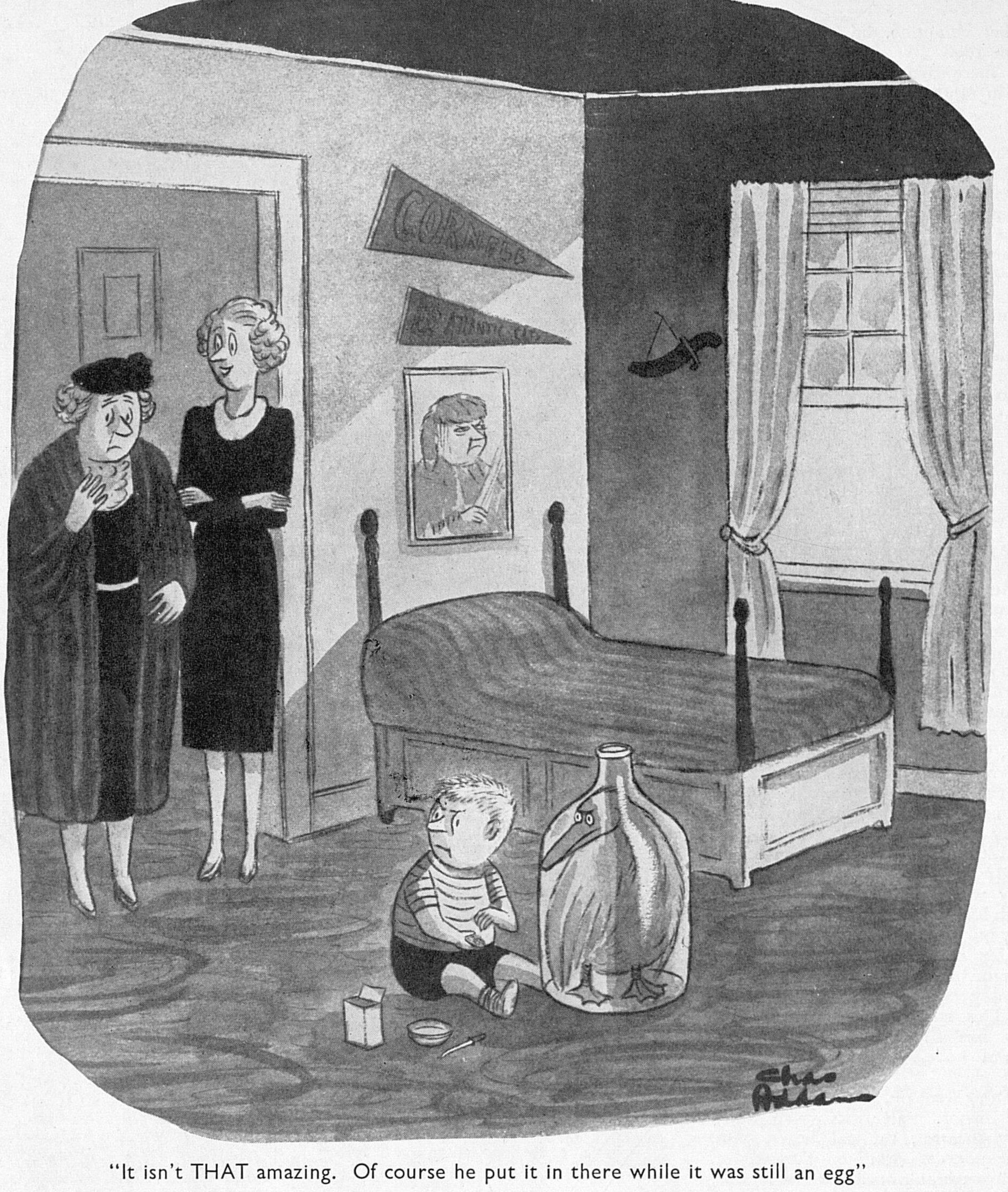
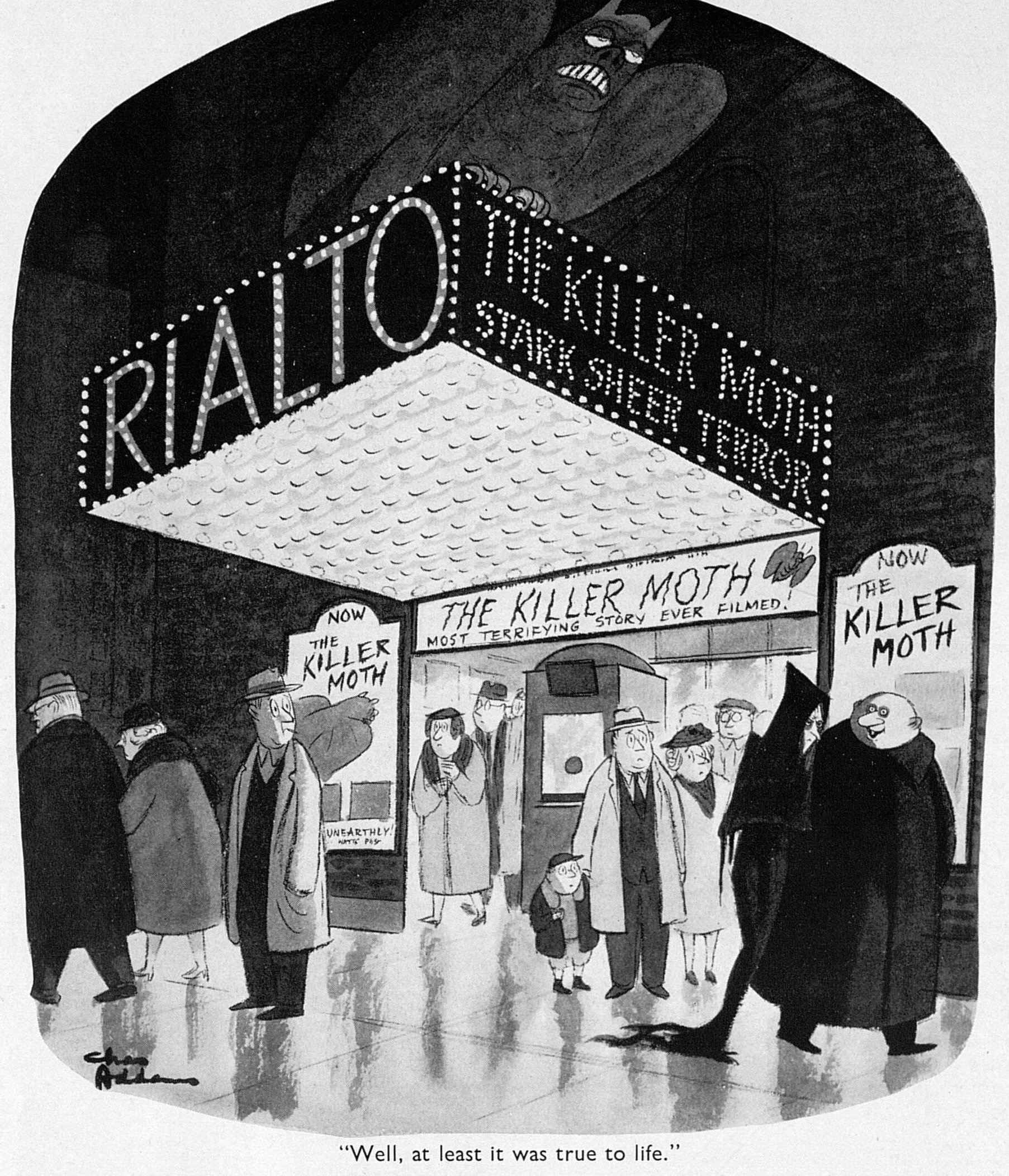
Charles Addams is best known as the creator of The Addams Family, a group of strange, monster movie adjacent characters who first appeared as cartoons in The New Yorker magazine.
The magazine first began printing cartoons by Addams in 1932, and he joined the cartooning staff of the magazine in 1935. Certain recurring characters who would later be associated with The Addams Family began appearing in his cartoons in 1937, but it wouldn’t be until the next year that he would collect them together into a recurring feature titled “The Addams Family”. In 1964, when the television show based on said characters debuted, they would finally be given names, which were provided by Addams himself.
Since 1964, the Addams Family has appeared in TV shows, animated cartoons, movies, and streaming series, but around the 1950s the main place to see them, or any other Charles Addams cartoons, was either in The New Yorker, certain other magazines like TV Guide or Colliers, or in books collecting his work. If you looked for it in the newspaper you would be very disappointed. That was, until 1955 when the McClure Syndicate began publishing a weekly black and white panel by Charles Addams titled “Out of This World” (which I have mentioned before). There isn’t much information available on this, but here’s what I could find.
In Allan Holtz’s book “American Newspaper Comics,” he lists the panel as running only in 1956, though I was able to find it running a bit earlier in December of 1955, and ending in December 1956. I also found it running in the British magazine Tatler for a period of 75 weeks, which means it had to have run in the newspaper for more than a year. It ran weekly, on Sundays, though it was printed only in black and white, much like Addams New Yorker cartoons.
While I can’t say for certain, it stands to reason that these were rejected New Yorker cartoons that Addams still particularly liked, so he wanted to see them published somewhere. I also imagine that McClure syndicate figured Addams was an established enough name that newspapers would buy the panel based on that alone. All of this is speculation, but when looking at the panels themselves, it’s hard to distinguish between the ones that were printed in the newspaper and the ones printed in the magazine.
Further, some of the Out of This World panels include characters that look very similar to Addams Family characters, such as Pugsley and Uncle Fester.
This brings me to another interesting point: In researching this, I came across the Charles and Tee Addams Foundation, who are “dedicated to advancing the artistic achievement of American cartoonist, Charles Samuel Addams,” from a comment left on a blog post by one of its members, H. Kevin Maserocchi. He states that he is aware of 65 of these cartoons which were published in newspapers, though somehow it also ran in the Tatler magazine for 75 weeks. Further, many the originals are owned by the foundation and are displayed at exhibitions. This is interesting, given the lack of information available from the foundation about the syndicated strip. If the foundation is aware that they were printed in newspapers, one would think they would acknowledge that fact somewhere on their website, given the amount of information they do provide on Addams' life and career.
Yet, it is nowhere to be found. The biographical timeline doesn’t mention Out of This World, and there’s no mention of it in the biographical sketch. The timeline does list the 1957 publication of “Nightcrawlers,” a collection of Addams cartoons, which included some from Out of This World, but it does not mention the strip.
So, Miserocchi’s comment implies that, while they are aware of the strips, and they are valued just as highly as the magazine cartoons, they have not displayed, republished, or reprinted them with any recognition of their status as newspaper comics. They are treated the same as the rest of his work. Which brings me back to my earlier statement: it would be hard for a layperson to distinguish these cartoons from his other work, and it seems it’s either just as hard for the foundation to do so, or they have just decided not to.
I can’t say I’m extremely bothered by this, because I think newspaper comics should be valued as highly as other comic works and art works, but it’s just interesting that there is no acknowledgment. It would be nice for there to be some, given how difficult it is to find mentions of the newspaper strip anywhere. The definitive biography of Addams, “Charles Addams: A Cartoonist’s Life” by Linda H. Davis, doesn’t mention it at all. Even the Wikipedia page only mentions it in passing, with no citation.
All that said, I feel like this lends credence to the idea that they were rejected New Yorker cartoons. If they were originally meant to be in a certain publication, it makes sense to continue to associate them with other cartoons that ran in that publication.
For more information:
Out of This World panels at Ink Spill blog. Of particular note is the comment from H. Kevin Maserocchi
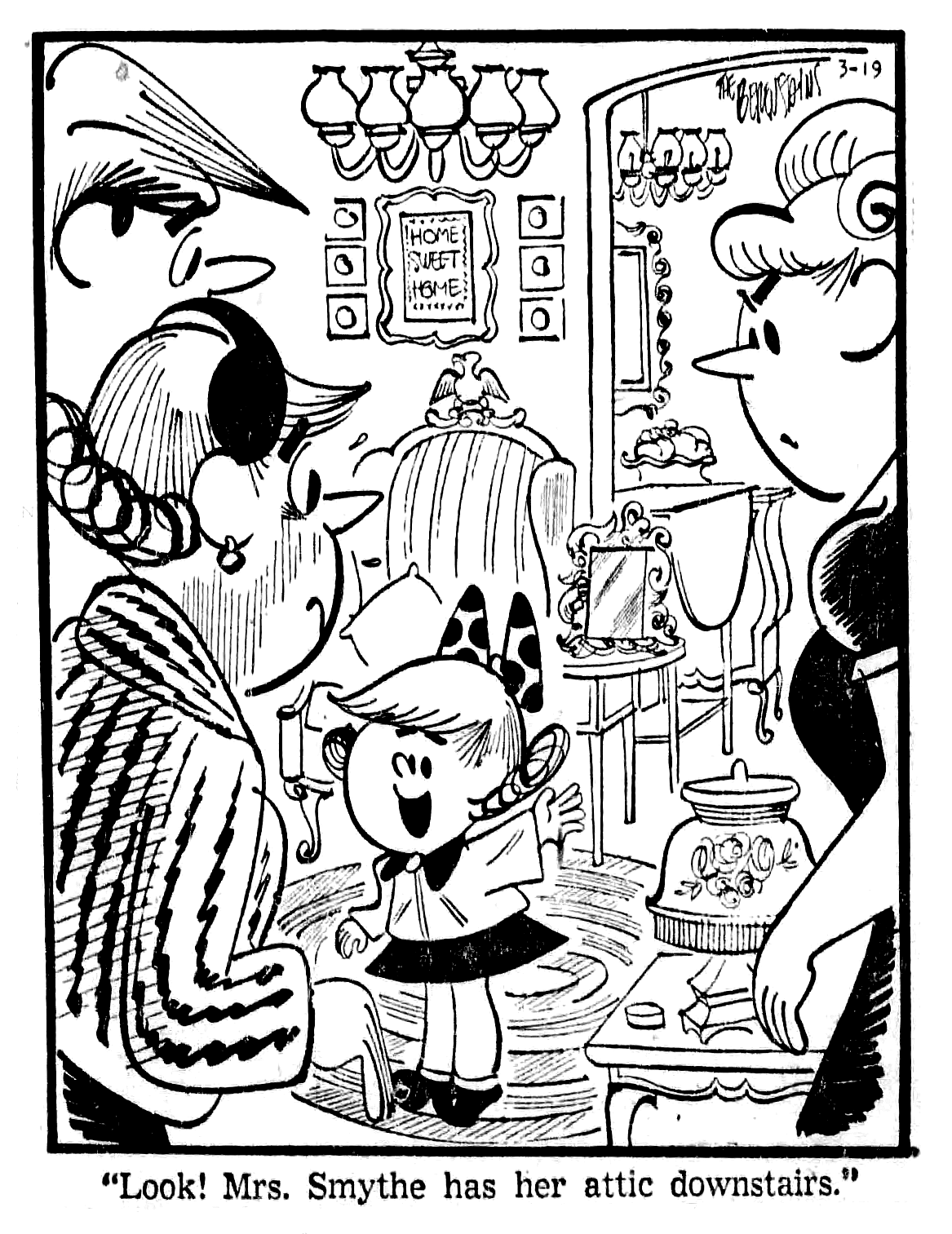
Stan and Jan Berenstain (not Berenstein, and no we will not be discussing the Mandela Effect today) are of course best known for creating the series of children’s books The Berenstain Bears. Books in the series have been published since the 1960s, and are still published now, overseen by Stan and Jan’s son Mike. A much less well known fact is that the Berenstains had a fairly long cartooning career prior to creating the Bears, even creating a syndicated newspaper comic.
Despite both growing up in Philadelphia, and at one point even living in the same neighborhood, they didn’t meet until they were college students, on the first day of drawing class at what was then called the Philadelphia Museum School of Industrial Art (later called University of the Arts, and which sadly closed down in 2024). Shortly thereafter, they would be separated by World War II, as Stan was drafted into the Army, but they would still put their artistic abilities to use. Much of Stan’s time in the Army was spent at a hospital as a medical illustrator, making detailed drawings of soldiers who had undergone facial reconstruction surgery. As you can imagine, the work could be quite unpleasant, so to keep things light he created cartoons featuring a bumbling, incompetent soldier character called Oglethorpe, which would end up getting published in several Army newspapers. Not satisfied with just being published in Army publications, he also sent some cartoons to a magazine called the Saturday Review of Literature, and was paid $35 per cartoon (which, by 1940s standards, was pretty good, especially for a soldier).
While Stan was in the Army, Jan also contributed to the war effort as a riveter, as well as a mechanical illustrator for the Army Corps of Engineers. When Stan returned home in 1946, they were so happy to be reunited that they were married less than two weeks later. Encouraged by Stan’s earlier success at selling cartoons to a magazine, the two decided to become a cartooning team and submit to as many magazines as they could.
They were not met with very much initial success. No major magazine wanted to buy their work. They were able to consistently sell to the Saturday Review of Literature, but mostly because the cartoons they submitted were mainly about art and literature. In his book on their early cartooning work, their son Mike recounts a meeting that Stan had with an editor of The Saturday Evening Post. He asked Stan if he had ever actually read their magazine, and when Stan replied that he had, the editor said he found it quite surprising given the kinds of cartoons that he sent in. He praised the overall quality of the work, but said that what they wanted was cartoons about families and parents, not art and culture. With this in mind, Stan and Jan decided to be a bit more targeted in their humor, to appeal to the audience that read the magazines they were trying to sell cartoons to.
The Berenstains weren’t parents yet, so their ability to write jokes from the perspective of a parent was limited. Around this time, they took jobs as instructors at the Settlement School in South Philadelphia. Their experience at the school, as well as thinking back to many of their own experiences as children, inspired them to write jokes from the perspective of kids. Unlike their previous batches of cartoons, these proved to be far more popular, and major magazines such as the aforementioned Saturday Evening Post and Collier’s began buying them. One cartoon editor suggested that it would also be good publicity at family magazines to reinforce that they were a husband and wife team, so they began signing all of their work “The Berenstains.” This new direction helped them go from selling to only one or two no-name magazines to regularly selling to the biggest names in the business.
A lot of their success came from Collier’s Magazine, where they gained popularity for a series of full page cartoons which depicted large scenes of groups of children playing in various ways, such as at recess, on a frozen lake in winter, and in the school gym. In addition to the interiors, they were able to get many cartoons on the cover of the magazine, which only increased their notoriety. This led to their main output being for Collier’s, and their cartoons becoming a regular feature in every issue. A popular recurring character in their Collier’s cartoons was a young girl named Sister, a tomboyish, no-nonsense type reminiscent of Little Lulu or Nancy. She has over the years often been compared to Dennis the Menace, though she predates him by a couple of years.
Around this time, in 1951, the Berenstains were also contacted by book publisher Macmillan, who asked them to do a book of cartoons about parenting. They had a child and were parents by that time, and where therefore able to pull from that experience to create a book called “The Berenstains' Baby Book.” Multiple similar humor books followed, including a collection of the Collier’s Sister cartoons. While their cartoons of that era didn’t have very many recurring characters, Sister was certainly their most popular. This led them to consider doing something they had never done before, which was submit the cartoons for syndication at a newspaper.
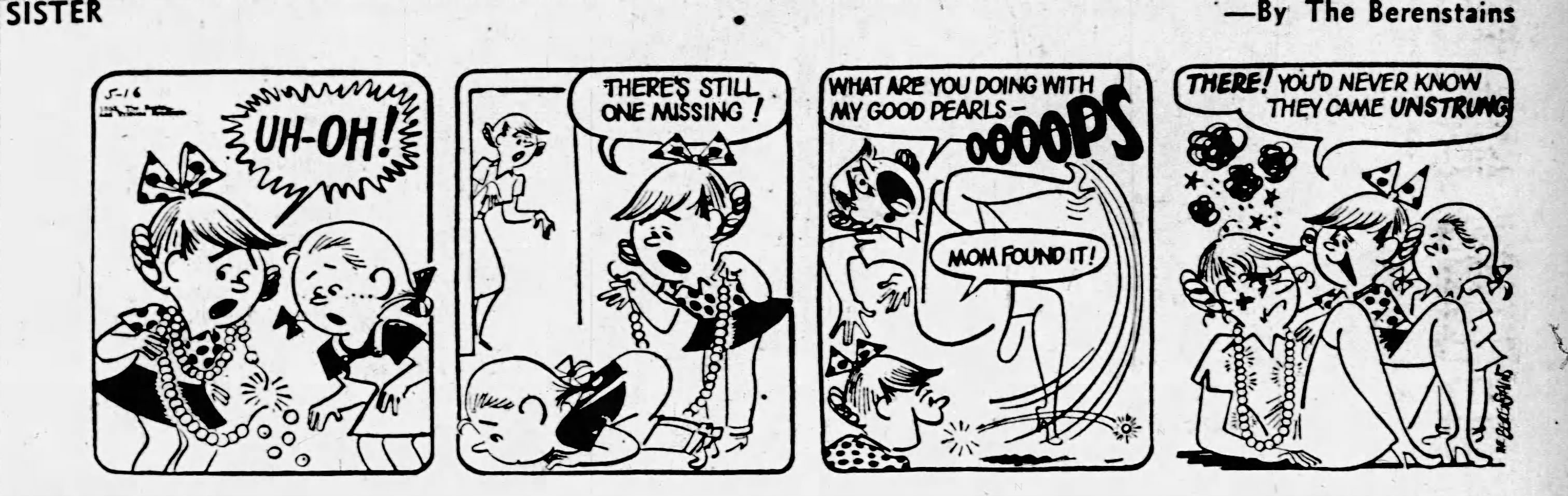
The comic strip “Sister” was picked up by Register and Tribune Syndicate, and the first strip ran on April 6, 1953. While their magazine cartoons were generally a single panel, the daily newspaper comics were always two to three panels, and of course several more on Sundays. This was the case for the first year, at least. In July of 1954, the dailies switched to a single panel format, though the Sundays continued to be multiple panels. This is kind of a shame, because I think the Berenstains did a better job when they had the space to build up to a punchline rather than just immediately deliver a gag. Comic strip historian Allan Holtz has a low opinion of the strip, and thinks many of the gags were actually “recycled” from Dennis the Menace, though I think Sister has a different kind of charm to her than Dennis does. He also notes that she seems to be misnamed, given that she’s an only child, which I can’t argue with.
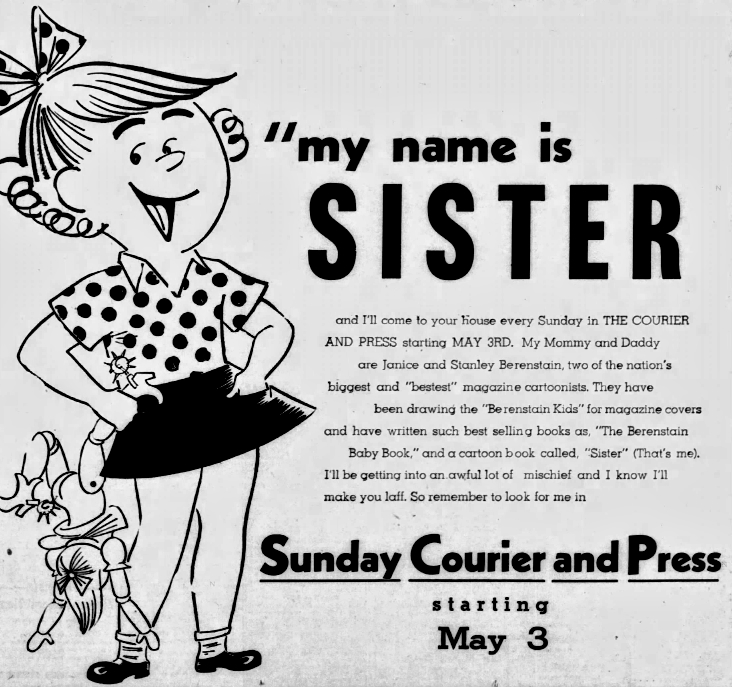
Unfortunately, most readers and newspaper comics editors had much the same opinion as Holtz, as Sister never ran in very many papers over its lifetime. Advertisements for the new strip in newspapers always mentioned the Berenstains' magazine cartoons, clearly hoping to pull in some of the magazine readers, but this didn’t seem to do much to increase readership. After a short while, Stan and Jan found that the amount of time and effort put into the strip was not worth what they were getting out of it. The strip ended after only 3 years, on April 15, 1956.
After this, their newspaper career was over, and they would never syndicate a comic strip again. They immediately went back to working at Collier’s, though that magazine also ceased publication at the end of 1956. Afterwards, they created a recurring magazine feature “It’s All In The Family,” which first ran in McCall’s and later Good Housekeeping, until it ended in 1988. The first Berenstain Bears book was published in 1962, and would of course spawn the series of books that eclipsed all of their previous cartooning work. Sister wasn’t the last time they would attempt a syndicated newspaper comic, however. According to a listing from Editor & Publisher magazine in 1982, a comic strip based on the Berenstain Bears was at one point under development and set to be syndicated by King Features, but never came about.
For more information:
Child’s Play: The Berenstain Baby Boom, by Mike Berenstain, Stan and Jan’s son
Sister at Stripper’s Guide
The Berenstains at The Daily Cartoonist
Team Berenstain part 1, part 2, part 3, and part 4 at the Berenstain Bears Blog
Berenstain cartoon books, early magazine cartoons, and Sister from Collier’s Magazine at Mike Lynch’s blog
More on the Berenstain cartoon books at Berenstain Bears Collectors
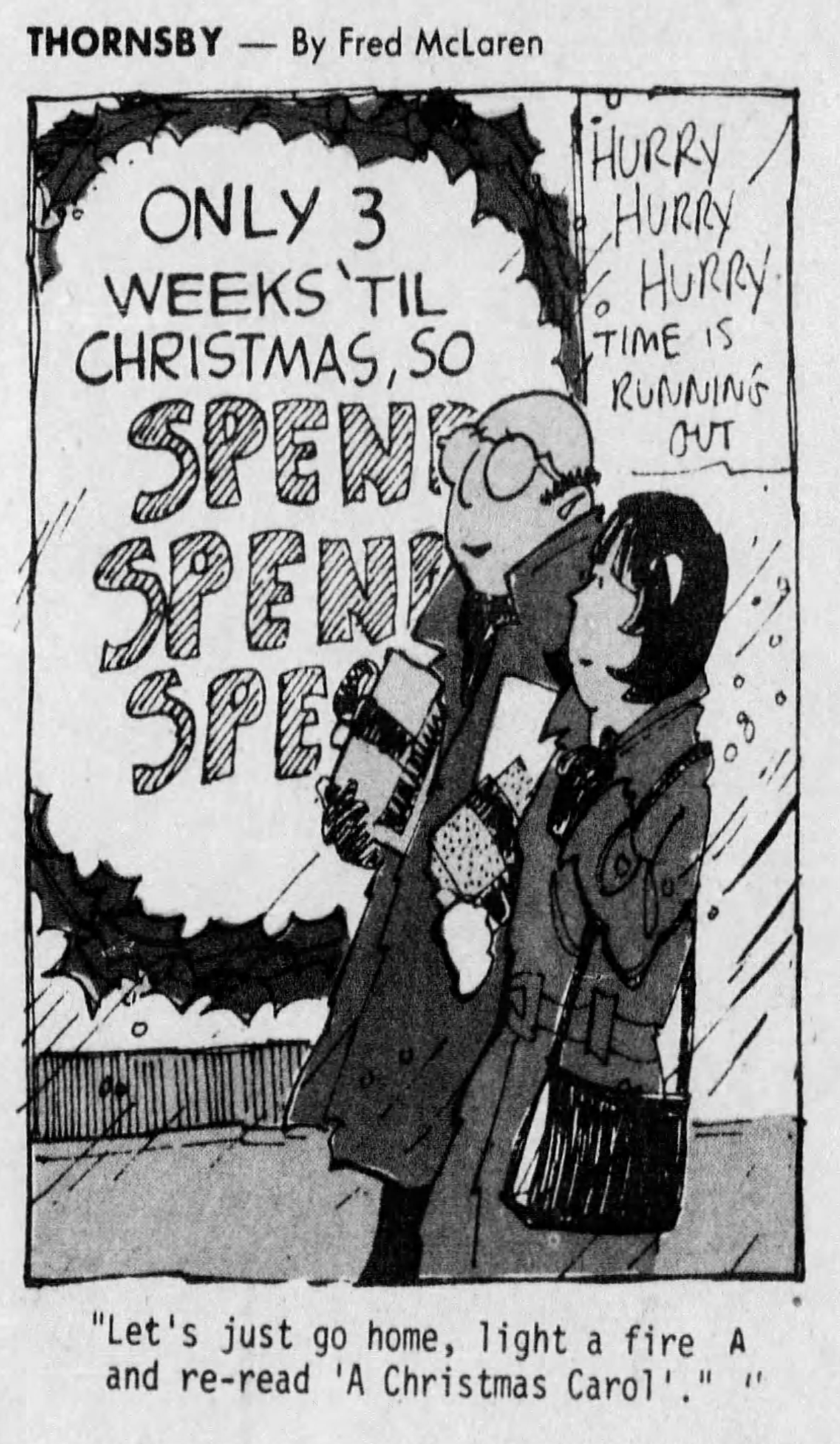
Thornsby was a single panel comic that ran from 1973 to 1975. It seems to be a bit of an obscurity, as I wasn’t able to find out much more than that, even from my usual obscurity sources. What I did find, however, is that Tom McLaren, the son of Thornsby cartoonist Fred McLaren, has collected all of his father’s work together into a book, which is available for purchase as print-on-demand on his website or directly from Lulu.
Looking at this panel in particular, it certainly seems like not much has changed in the 50 years since this was published. I think we could all do with a reread of A Christmas Carol. In fact, I think everyone needs a little more Charles Dickens in their life at any time of year (and here’s a good place to start).
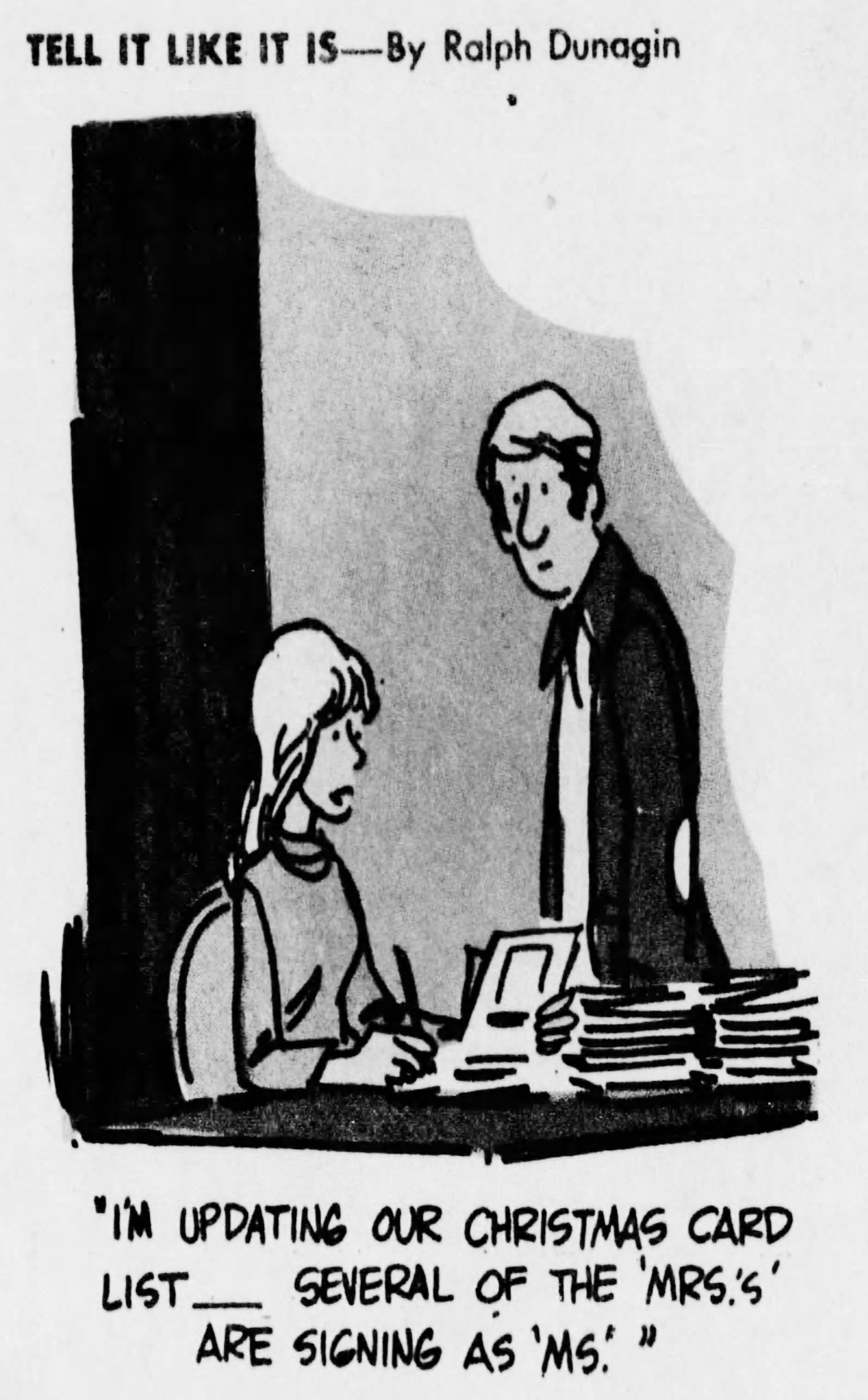
Ralph Dunagin was an editorial cartoonist for the Orlando Sentinel who also worked on a few syndicated comic strips. He wrote gags for “Grin and Bear It” and wrote for “The Middletons,” and he also wrote and drew his own syndicated comic. Originally titled “Tell It Like It Is,” it was eventually renamed “Dunagin’s People.” While never overtly political, it still touched on various social issues of the day.
I picked this one because it feels very much like a comic from 1974, given the popularity of the title “Ms.” at that time. I also really like the ambiguity of the gag. As “Ms.” is meant to not indicate marital status, it could be that a number of these women have just chosen to utilize a new title for themselves, or it could be that their marital status has changed. Being able to understand a joke on multiple levels is always an indicator of a well-written gag.
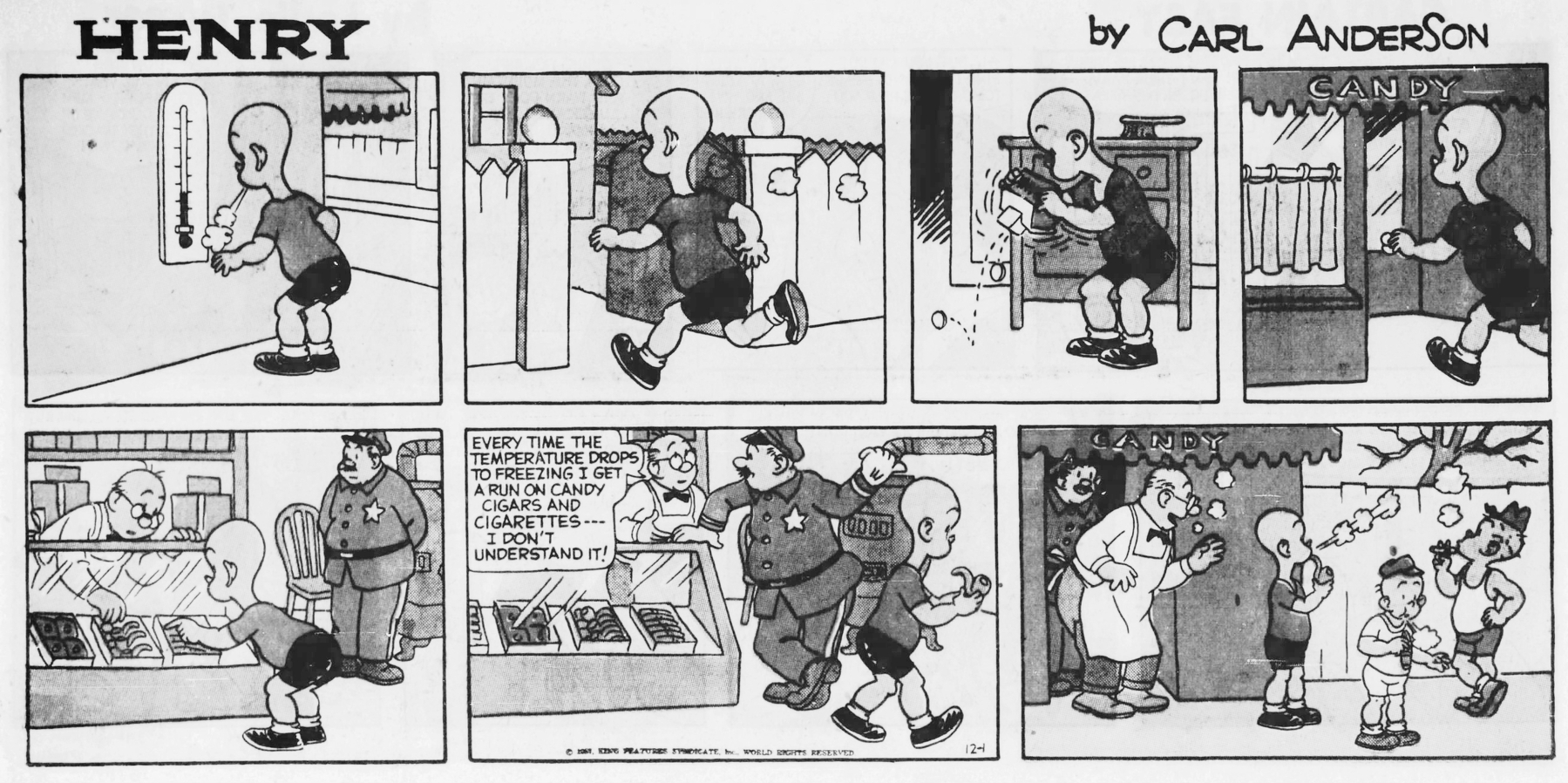
Henry is so ubiquitous when I’m searching through old newspapers for winter and Christmas themed comic strips that I was sure I had posted him in a previous December. After searching through my prior posts, however, I found that not to be the case.
Henry is often known as a pantomime strip, because the titular character doesn’t speak and neither do some of the other characters. This is not true of every character, though, as we see here with the candy shop man. The strip was created by Carl Thomas Anderson, and continued to be credited to him even after his death. Anderson died in 1948, and the Sunday version of the strip was taken over by his assistant, Don Trachte, who did the strip you see here.
It seems kids of every era were doing whatever they could to mimic adults and act more “grown-up.” Back in the days when cigarettes were advertised on television, if this strip is any indication, pretending to smoke was a popular thing to do. I sure hope they didn’t take up the real thing when they got older, though.
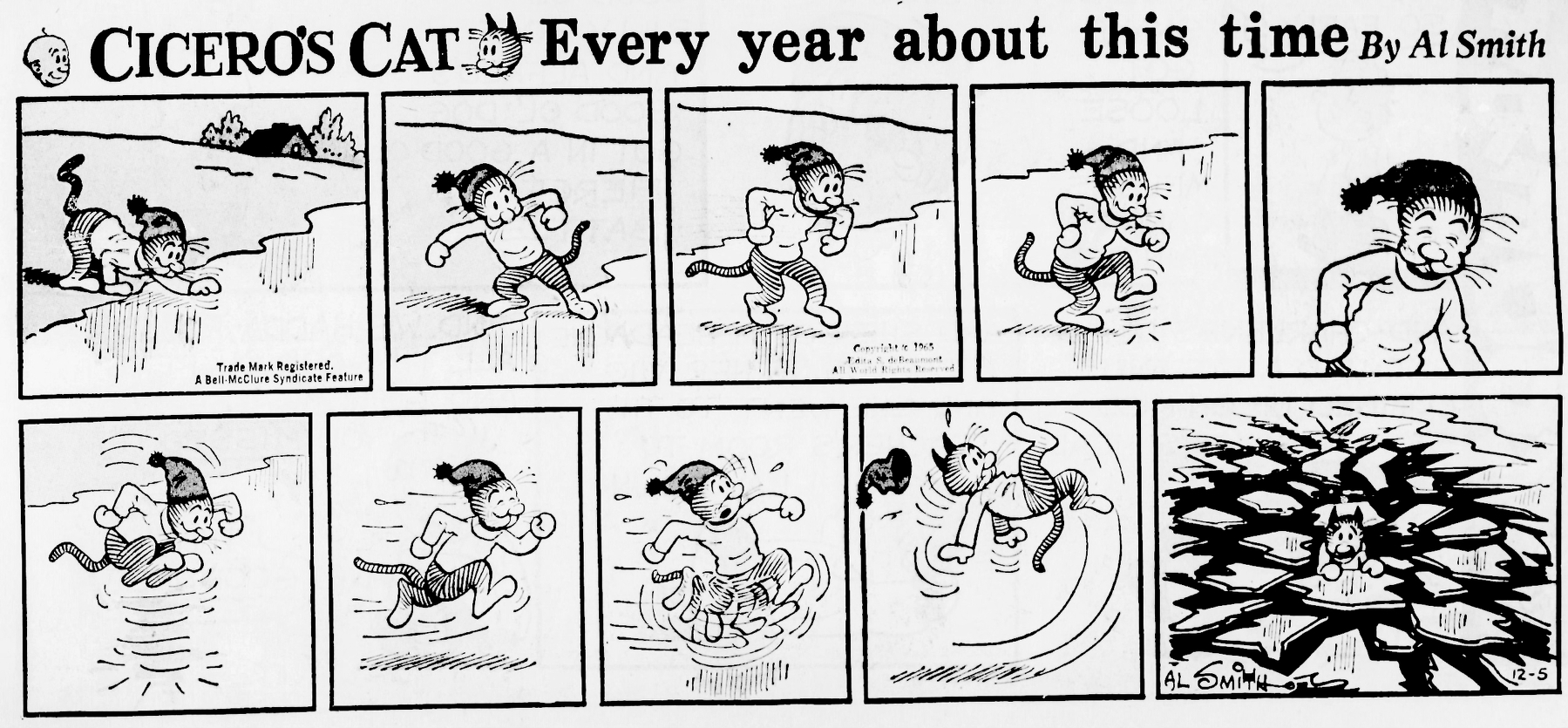
Cicero’s Cat began as a topper strip to the venerable Mutt and Jeff. The character of Cicero was the son of Mutt, and the topper originally focused on Cicero himself. The cat, named Desdemona, proved to be more popular than her owner, and eventually the topper was focused entirely on her. In fact, she proved to be so popular that often the topper would be printed separately, apart from Mutt and Jeff, though it never officially became its own strip. Since Desdemona doesn’t speak, or even “think speak” like Snoopy or Garfield, it also became a pantomime strip as can be seen here. Mutt and Jeff was created by Bud Fisher, though Al Smith often assisted, and upon Fisher’s death in 1954 Smith took over both the main strip and the topper.
I’ve never lived anywhere near any kind of pond or lake that regularly freezes over in the winter, so I’ve never been out on ice like in this strip, but even if I did I don’t think I would be brave enough to press my luck like Desdemona does here. If she had just done some ice dancing on the lake then perhaps she would have been fine. Unfortunately, you know what they say, curiosity about the sturdiness of ice dumped the cat into freezing water (or something like that).
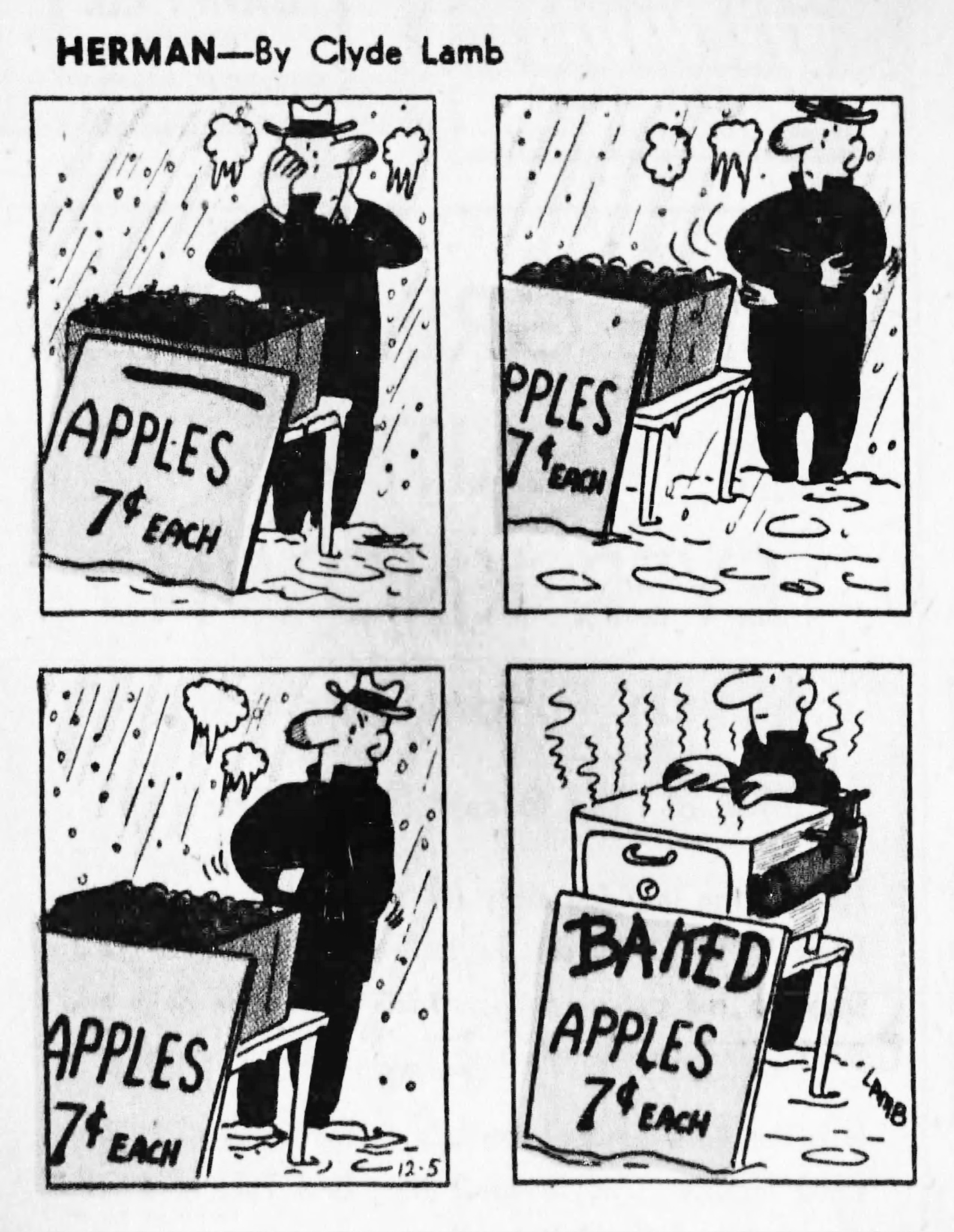
Herman (still by Clyde Lamb and not by Jim Unger) is a comic strip I haven’t revisited in a while, so here’s another one. To be clear, I have nothing against Jim Unger’s Herman, but I just find Lamb’s Herman to be more interesting and funny. Plus, Jim Unger doesn’t have nearly as wild of a life story as Clyde Lamb does. To make a long story short, Lamb started his art career while in prison for the third time. The first time, he was arrested for armed robbery but was able to escape. The second time, he was arrested for armed robbery again and his wife tried to help him escape and was caught, but he was able to successfully escape at a later time. He was arrested and put in prison for the third time due to his previous prison escapes. He learned art and began to draw cartoons during his third prison sentence, and after he was released in 1947 he started drawing the comic strip Herman, which debuted in newspapers in 1949. He was never imprisoned again after that, thankfully. Herman ran until Lamb’s death in 1966.
Today’s wintery strip is nothing nearly as exciting as all that. It’s just a shrewd apple salesman finding ways to make money while still keeping warm. A baked apple does sound like it would be a nice treat on a cold day.
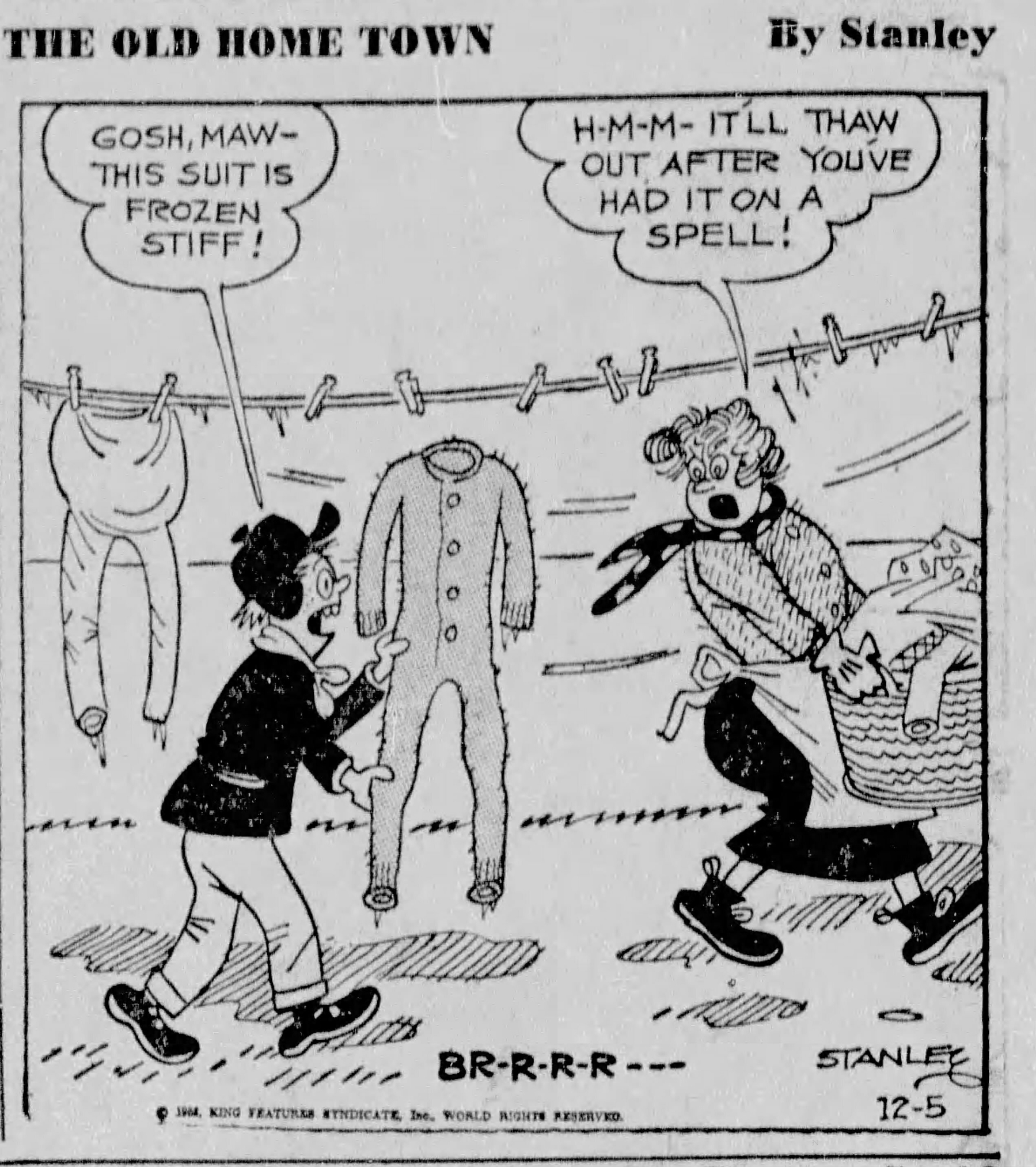
The Old Home Town seems to be a cross between a hillbilly strip like Li’l Abner or Snuffy Smith and a nostalgic single panel comic like Out Our Way. The cartoonist, Lee Wright Stanley, was from Kansas and was familiar with the rural folk of that region, and wrote what he knew. The strip ran from 1923 to 1966, and apparently coined a number of catchphrases that were popular during that period, though they didn’t have much staying power because I haven’t heard any of them in my lifetime. An article from 1939 states that the strip popularized such phrases as “Hold ‘er Newt, she’s arearin’,” “Git fer home, Bruno,” “Just ez I thought,” “Effen it’s news to you –,” and “What’s the fuss?”. Some of them just seem like normal phrases anyone could have come up with, so this may require further research.
As for this particular panel… All I have to say is, can’t he at least hold it in front of a fire for a bit before putting it on? Putting it on right off the line sounds like hypothermia waiting to happen.
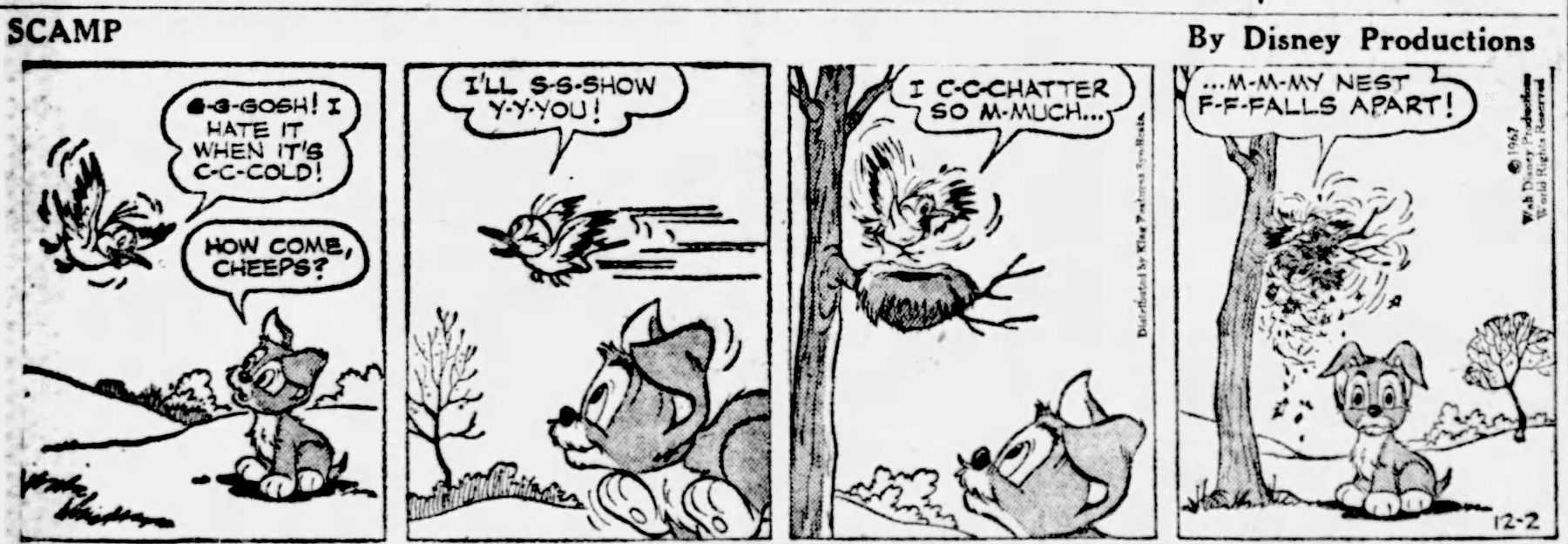
Even though it was one of the lesser known Disney comic strips, Scamp ran for an impressive 33 years, from 1955 to 1988, with the Sunday strip running almost as long, from 1956 to 1988. The character first appeared at the very end of the movie Lady and the Tramp, as the child of the titular characters. It didn’t take long before he was appearing in a Dell Comics comic book series, and a few months later a newspaper strip, both of which debuted the same year as the movie. It wasn’t until 2001 that Scamp would get his own direct-to-video movie, though given the track record of Disney direct-to-video, I imagine the comics were of a higher quality.
Here, we see Scamp’s friend Cheeps complaining about the cold, though if a bird is cold even in its nest then it probably wasn’t built properly in the first place. Though, from my understanding, that’s the gimmick behind Cheeps; he’s very bad at making nests. Maybe this year Scamp can lend some of his fur to Cheeps to line his nest with so he won’t be so cold.
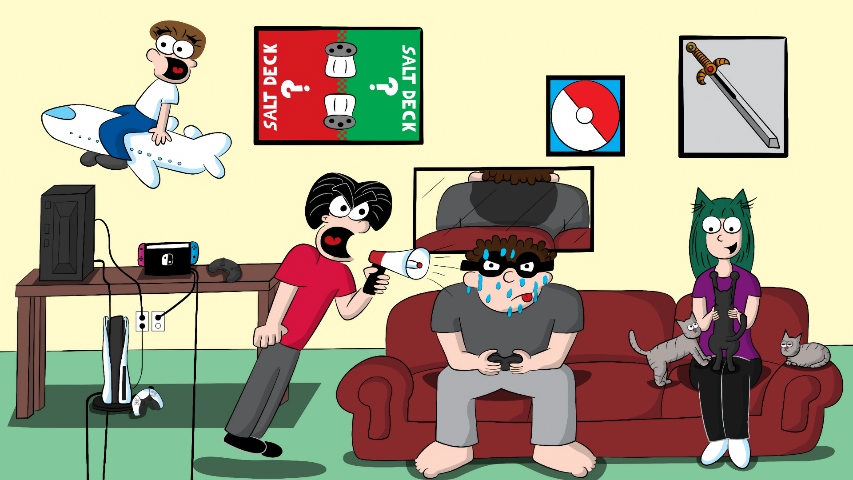
I was recently commissioned to draw an offline/banner image for the Twitch channel SaltCommittee, featuring the four main members doing what they do. I think I captured their essences quite well. Take a look on my portfolio site:
LYNN JOHNSTON: I spoke to Garry Trudeau… He was very comforting, and he said, “If you want to make a statement, you have to make it with all honesty and truth and be comforted knowing that it was made with your own strong sense of values and truth.”
TOM HEINTJES: You’re handling this sequence so deftly and so honestly, with a perceptiveness that seems so authentic. I’m left wondering if you simply wrote it from out of your imagination.
LYNN JOHNSTON: I didn’t. I wrote it from experience. My brother-in-law is gay. It certainly has not been by design, but so very many of my friends have been gay, all the way through school, art school, even in my husband’s dental class — our very best friend, who graduated with Rod, was gay and is now HIV-positive. He’s been thrown out of his home. We’ve been part of the private lives of so many people who have had to deal with this. I know this story. I know it’s a true one, and I know the dialogue by heart.
TOM HEINTJES: That explains why it seemed so palpably real.
LYNN JOHNSTON: It is real. That’s why I can stand tall and know that I am not making up a story simply to shock people. I produced a story that is so true that it’s painful. You know what it’s like? It’s like lancing a boil and taking out the thing that won’t allow it to heal. Not that I intended to do that, but I had the confidence that I could tell this story from the side of the people who had experience. In that way, I was being very true to myself, my strip and to them. The strip’s always been very honest.
TOM HEINTJES: How is your mail running, now that a large part of sequence has run?
LYNN JOHNSTON: At this point, it’s overwhelmingly supportive… For the most part, I’m hearing from families, psychiatrists, doctors, teachers, very open-minded people who are saying, “Good ー we have left this in a closet for far too long, and it’s time we allowed people a life.” And I’ve gotten letters of support from people of all ages. There are teachers who are going over this a day at a time with their students, with the approval of the students' parents. They’re writing and phoning to tell me that it’s an educational tool. One letter was from a mother who said that because of the strip, her son had the courage to tell her that he was a homosexual, and because of the strip, she had the courage to handle it well. I also got a letter from a woman in Edmonton who said that if the strip had run last year, perhaps her son would still be alive, because then he would know that he was not the only one in the world with this problem. It’s that kind of response that makes me think it’s been worth the rollercoaster ride it’s put me on. It would be so much easier not to make a statement, not to tell a story, to continue to be that yellowing page on the refrigerator.
LYNN JOHNSTON: …I never thought that I could do this. I never applied for this job. I never sent anything in and said, “Hey, check this out, give me a job.” When I signed a contract at Universal Press Syndicate, the people around that big rosewood table were interested in celebrating. They wanted to take me out to lunch, but I went back to the hotel and – swear to God -ー got physically ill.
TOM HEINTJES: You realized what you’d gotten yourself into.
LYNN JOHNSTON: How could I produce material every day, 365 days a year? How could I do that? I could see producing a book now and then, but a daily comic strip? I was going to have readers every day who would expect a certain level of quality work, and I think that maybe that’s why I segued into the little vignettes that have moralistic and motherly values, like little parables. I might not be able to have a joke every day, but I could have a thought every day.
When you’re very young, you often find yourself completely devoted to something, whether it’s Elvis Presley or a father figure or whatever. You become a cult member of some sort. And when I was very young, I wanted to be married to a minister. I didn’t want to be a minister, but I wanted to be the wife of one, because I wanted to write his sermons. I was about eight years old, and I would lie in bed and pray, “Please, God, make me a minister’s wife,” because I wanted to write something that would mean something to people!
I was brought up believing that everyone was bathed in sin. You would arrive at church, the day would be beautiful, the birds would be singing, everything would smell like fresh morning dew, and you’d feel great! And when you walked out after the service, you’d feel like you had nailed some poor sucker to a cross! “Wait a minute! I was happy until I came here!” [laughter] And I don’t think spiritual guidance necessarily means shredding your self-confidence and destroying your day. You should come out of church wanting to carry on and care about people, pursuing your dreams and being positive. And when I was that little girl, I wanted to write pieces for that audience that would lift them up and make them feel great! And do you know what?
TOM HENTJES: Yeah in a very real way, you ended up doing just that.
LYNN JOHNSTON: And I never even married a minister! [laughter]
TOM HEINTJES: Did you devise any sort of escape mechanism for the life you had?
LYNN JOHNSTON: I was very reclusive. I spent hours and hours in my room drawing. That was my other release, and that was my way of surviving. You see, anything I imagined, I could draw. And I found that if I was in a terrible depression and I closed my eyes, the blackness would appear to go on forever. But if I put it down on paper, it was no bigger than 8 ½ by 11, and I could deal with that. If you have a horror inside of you, it goes down to your marrow. But on paper, it’s not so bad.
“I don’t know Bill [Watterson]; I’ve never talked to him. I wrote a foreword for one of his books, but I’ve never talked to him. Like I said before, we’re all individuals, and I dreamed of becoming a comic strip artist. I never thought about licensing or anything like that, but I was driving down the street one day and I saw a truck that had Yosemite Sam pasted on the back of the truck. And I thought, “People love cartoon characters, and the man who drives this truck loves Yosemite Sam enough to paste his likeness to the back of his truck.” What in the world is wrong with that? People love coffee cups and things, and if you can put the characters on TV, sometimes it’s just terrible, but if you can do it [well], fine. You’re A Good Man, Charlie Brown is the most-performed musical in the history of the American theater, because we did it right, and I don’t see anything wrong with that. Plus: I don’t think I’m a true artist. I would love to be Andrew Wyeth or Picasso… but I can draw pretty well and I can write pretty well, and I think I’m doing the best with whatever abilities I have been given. And what more can one ask?”